African diaspora in Finland
People in Finland of full or partial African ancestry
From Wikipedia, the free encyclopedia
The African diaspora in Finland (Finnish: afrikkalaisten diaspora Suomessa) refers to the residents of Finland of full or partial African ancestry, mostly from Sub-Saharan Africa. As of 2024[update], there were 54,046 people born in Africa living in Finland.[3] Similarly, the number of people with African background[a] (Africans in Finland; Suomen afrikkalaiset) was 75,953.[4]
The distinct adjacent term Afro-Finns (afrosuomalaiset), also referred to as Black Finns (mustat suomalaiset),[5][6][7][8] can be used for Finns whose lineages are fully or partly in the populations of Sub-Saharan Africa ("Black Africa").[9][10] Afro-Finns have lived in Finland since the 19th century. In 2009, according to Yle, there were an estimated 20,000 Afro-Finns in Finland,[11] and according to Statistics Finland, the total number of people in Finland with a close Sub-Saharan African background[d] was 62,759 in 2024.[4]
History
.jpg)
Finns reacted to the first Sub-Saharan Africans in Finland with curiosity and amazement.[12] In the 19th century, some Africans from the Americas worked as servants for wealthy Russians in the Grand Duchy of Finland.[5] The first known African to receive Finnish citizenship was Rosa Lemberg who came to Finland from Ovamboland in 1888 and was granted citizenship in 1899.[13][14]
Between the 1900s and the 1970s, the few Africans in Finland were mostly students (e.g., from Nigeria and Ethiopia), political exiles from South Africa or people married to Finns.[5] In World War II (1939–1945), there were some Afro-Finnish soldiers, including Private 1st Class Rudolf Prüss, who served as a ski patrol leader on the Karelian Isthmus and was killed in the Winter War, and Corporal Holger Sonntag, who was of African-American and German descent and served as a driver in both the Winter War and the Continuation War.[15]
In 1990, during the Somali Civil War, the first Somali refugees arrived in Finland.[16][17] After that, due to their high fertility rate, along with the significant number of Somali family reunifications, quota refugees and asylum seekers, they rapidly became the largest African group in Finland.[18][19] During the 2003 FIFA U-17 World Championship held in Finland, most of the Sierra Leone national under-17 football team's players defected to Finland due to the poor conditions in their country, following a civil war that had ended a year earlier.[20]
In the 21st century, most people of African ancestry have come to Finland from Africa, but many have also arrived from the United States, Latin America and other European countries. In particular, Americans and British people of African descent have moved to Finland, mostly through marriage.[21]
Demographics
| Year | Pop. | ±% |
|---|---|---|
| 1990 | 1,720 | — |
| 1991 | 3,798 | +120.8% |
| 1992 | 4,631 | +21.9% |
| 1993 | 5,990 | +29.3% |
| 1994 | 7,002 | +16.9% |
| 1995 | 7,831 | +11.8% |
| 1996 | 8,554 | +9.2% |
| 1997 | 9,698 | +13.4% |
| 1998 | 10,777 | +11.1% |
| 1999 | 11,382 | +5.6% |
| 2000 | 11,802 | +3.7% |
| 2001 | 12,900 | +9.3% |
| 2002 | 13,724 | +6.4% |
| 2003 | 14,775 | +7.7% |
| 2004 | 16,135 | +9.2% |
| 2005 | 17,793 | +10.3% |
| 2006 | 19,278 | +8.3% |
| 2007 | 21,509 | +11.6% |
| 2008 | 24,109 | +12.1% |
| 2009 | 26,446 | +9.7% |
| 2010 | 29,041 | +9.8% |
| 2011 | 31,518 | +8.5% |
| 2012 | 33,968 | +7.8% |
| 2013 | 36,634 | +7.8% |
| 2014 | 39,490 | +7.8% |
| 2015 | 42,689 | +8.1% |
| 2016 | 46,113 | +8.0% |
| 2017 | 48,749 | +5.7% |
| 2018 | 51,645 | +5.9% |
| 2019 | 54,450 | +5.4% |
| 2020 | 57,496 | +5.6% |
| 2021 | 60,614 | +5.4% |
| 2022 | 65,007 | +7.2% |
| 2023 | 70,592 | +8.6% |
| 2024 | 75,953 | +7.6% |
| Source: Statistics Finland[4] | ||
As of 31 December 2024, according to Statistics Finland, the total number of people in Finland with a close African background[a] is 75,953, which is 1.4% of the population of Finland.[b] 42,118 (55.45%) of them are men, while 33,835 (44.55%) are women. 62,759 (82.6%) of them are from Sub-Saharan Africa.[c][4]
Countries of origin
| Country | Population (1990) | Population (2024) |
|---|---|---|
| Total | 1,720 | 75,953 |
 Somalia Somalia |
49 | 26,722 |
 Nigeria Nigeria |
89 | 7,559 |
 DR Congo DR Congo |
6 | 5,268 |
 Morocco Morocco |
395 | 4,952 |
 Ethiopia Ethiopia |
108 | 4,193 |
 Ghana Ghana |
67 | 3,280 |
 Kenya Kenya |
71 | 3,221 |
 Cameroon Cameroon |
4 | 2,647 |
 Egypt Egypt |
195 | 2,367 |
 Sudan Sudan |
11 | 2,297 |
 Eritrea Eritrea |
1 | 1,855 |
 Algeria Algeria |
210 | 1,759 |
 The Gambia The Gambia |
23 | 1,600 |
 Tunisia Tunisia |
145 | 1,476 |
 Angola Angola |
3 | 726 |
 South Africa South Africa |
54 | 718 |
 Tanzania Tanzania |
56 | 699 |
 Rwanda Rwanda |
2 | 564 |
 Uganda Uganda |
7 | 560 |
 Zambia Zambia |
27 | 418 |
 Libya Libya |
19 | 343 |
 Senegal Senegal |
10 | 312 |
 Zimbabwe Zimbabwe |
7 | 237 |
 Sierra Leone Sierra Leone |
20 | 214 |
 Burundi Burundi |
3 | 211 |
 Ivory Coast Ivory Coast |
12 | 208 |
 Liberia Liberia |
6 | 203 |
 Guinea Guinea |
4 | 199 |
 Republic of the Congo Republic of the Congo |
17 | 186 |
 Namibia Namibia |
66 | 170 |
 Togo Togo |
3 | 141 |
 Mozambique Mozambique |
5 | 71 |
 Mauritius Mauritius |
12 | 56 |
 Benin Benin |
1 | 45 |
 Mali Mali |
3 | 43 |
 Burkina Faso Burkina Faso |
0 | 40 |
 Djibouti Djibouti |
0 | 40 |
 Malawi Malawi |
2 | 37 |
 Mauritania Mauritania |
0 | 37 |
 Niger Niger |
1 | 36 |
 Central African Republic Central African Republic |
0 | 31 |
 Madagascar Madagascar |
0 | 30 |
 Botswana Botswana |
0 | 29 |
 Equatorial Guinea Equatorial Guinea |
0 | 28 |
 South Sudan South Sudan |
N/A[e] | 27 |
 Guinea-Bissau Guinea-Bissau |
0 | 25 |
 Cape Verde Cape Verde |
2 | 20 |
 Gabon Gabon |
0 | 14 |
 Seychelles Seychelles |
0 | 14 |
 Eswatini Eswatini |
1 | 10 |
 Chad Chad |
2 | 8 |
 Comoros Comoros |
1 | 7 |
 Lesotho Lesotho |
0 | 0 |
 São Tomé and Príncipe São Tomé and Príncipe |
0 | 0 |
Countries with a significant African diaspora
The following countries outside Africa have a majority population of Afro-descendants (90% or more of the country's total population)[22] and, as of 31 December 2024, a total of 147 expatriates or close descendants[f] in Finland:[4]
- The Bahamas – 7
- Barbados – 13
- Haiti – 15
- Jamaica – 111
- Saint Kitts and Nevis – 1
African languages
| Language | Speakers (2020) |
|---|---|
| Total | 36,150 |
| Somali | 22,794 |
| Swahili | 2,560 |
| Amharic | 1,662 |
| Tigrinya | 1,662 |
| Kinyarwanda | 1,226 |
| Yoruba | 1,044 |
| Igbo | 938 |
| Lingala | 929 |
| Twi | 670 |
| Akan | 487 |
| Wolof | 336 |
| Kikuyu | 282 |
| Hausa | 223 |
| Fula | 174 |
| Oromo | 174 |
| Kongo | 156 |
| Luganda | 137 |
| Afrikaans | 119 |
| Ewe | 118 |
| Shona | 71 |
| Chewa | 69 |
| Kirundi | 67 |
| Afar | 52 |
| Luba-Katanga | 52 |
| Ndonga | 49 |
| Bambara | 17 |
| Zulu | 16 |
| Malagasy | 11 |
| Tswana | 10 |
| Sango | 9 |
| Northern Ndebele | 8 |
| Kwanyama | 5 |
| Kanuri | 4 |
| Southern Sotho | 4 |
| Swazi | 4 |
| Herero | 3 |
| Southern Ndebele | 3 |
| Xhosa | 3 |
| Venda | 2 |
Distribution
Municipalities
| No. | Municipality | Population (2022) | Percent of the municipality's population |
|---|---|---|---|
| 1. | Helsinki | 24,425 | 3.7% |
| 2. | Espoo | 8,811 | 2.9% |
| 3. | Vantaa | 8,682 | 3.6% |
| 4. | Turku | 3,719 | 1.9% |
| 5. | Tampere | 2,829 | 1.1% |
| 6. | Oulu | 1,841 | 0.9% |
| 7. | Vaasa | 1,621 | 2.4% |
| 8. | Jyväskylä | 1,128 | 0.8% |
| 9. | Lahti | 815 | 0.7% |
| 10. | Kuopio | 744 | 0.6% |
On 31 December 2020, 13.4% of the total population of Itäkeskus, a quarter of Helsinki, had an African background, which was the highest percentage of all subdivisions of Helsinki.[24]
Regions
On 31 December 2022, the region with the most people with a close African background[a] was Uusimaa with 45,025 people (2.6% of the region's total population), which is 69.3% of their total population in Finland.[25]
| Region | Population (2022) | Percent of the region's population |
|---|---|---|
| Åland | 135 | 0.4% |
| Central Finland | 1,210 | 0.4% |
| Central Ostrobothnia | 381 | 0.6% |
| Kainuu | 332 | 0.5% |
| Kanta-Häme | 894 | 0.5% |
| Kymenlaakso | 795 | 0.5% |
| Lapland | 418 | 0.2% |
| North Karelia | 442 | 0.3% |
| North Ostrobothnia | 2,133 | 0.5% |
| North Savo | 837 | 0.3% |
| Ostrobothnia | 2,326 | 1.3% |
| Päijät-Häme | 886 | 0.4% |
| Pirkanmaa | 3,266 | 0.6% |
| Satakunta | 448 | 0.2% |
| South Karelia | 394 | 0.3% |
| South Ostrobothnia | 265 | 0.1% |
| South Savo | 276 | 0.2% |
| Southwest Finland | 4,544 | 0.9% |
| Uusimaa | 45,025 | 2.6% |

Citizenships
On 31 December 2023, there were 23,672 people who had dual citizenship of Finland and an African country.[26]
Citizens of African countries who received Finnish citizenship by year:[27]
- 1990 – 70
- 1991 – 101
- 1992 – 104
- 1993 – 67
- 1994 – 56
- 1995 – 81
- 1996 – 120
- 1997 – 180
- 1998 – 788
- 1999 – 1,365
- 2000 – 522
- 2001 – 406
- 2002 – 419
- 2003 – 403
- 2004 – 426
- 2005 – 605
- 2006 – 658
- 2007 – 671
- 2008 – 891
- 2009 – 466
- 2010 – 368
- 2011 – 400
- 2012 – 1,559
- 2013 – 1,923
- 2014 – 1,750
- 2015 – 1,946
- 2016 – 2,137
- 2017 – 2,448
- 2018 – 1,904
- 2019 – 1,499
- 2020 – 1,250
- 2021 – 997
- 2022 – 1,393
- 2023 – 2,010
People born in Africa who received Finnish citizenship by year:[28]
- 1990 – 37
- 1991 – 87
- 1992 – 86
- 1993 – 42
- 1994 – 58
- 1995 – 78
- 1996 – 117
- 1997 – 175
- 1998 – 559
- 1999 – 829
- 2000 – 332
- 2001 – 275
- 2002 – 306
- 2003 – 290
- 2004 – 329
- 2005 – 387
- 2006 – 397
- 2007 – 426
- 2008 – 627
- 2009 – 329
- 2010 – 279
- 2011 – 297
- 2012 – 1,043
- 2013 – 1,344
- 2014 – 1,350
- 2015 – 1,447
- 2016 – 1,590
- 2017 – 1,844
- 2018 – 1,480
- 2019 – 1,231
- 2020 – 972
- 2021 – 764
- 2022 – 1,059
- 2023 – 1,449
Asylum seekers
1990–2013
From 1990 to 2013, a total of 14,481 African citizens applied for asylum in Finland, which was 22.4% out of the total of 64,536 asylum seekers. African asylum seekers by country of citizenship:
- Somalia – 7,576
- Nigeria – 1,210
- Algeria – 723
- Angola – 577
- Democratic Republic of the Congo – 568
- Ghana – 477
- Ethiopia – 395
- Cameroon – 313
- Morocco – 306
- Zaire – 305
- The Gambia – 298
- Libya – 206
- Egypt – 124
- Guinea – 115
- Sierra Leone – 112
- Liberia – 106
- Sudan – 106
- Rwanda – 105
- Tunisia – 104
- Kenya – 102
- Senegal – 77
- Ivory Coast – 69
- Eritrea – 61
- Togo – 52
- Republic of the Congo – 45
- Mali – 43
- Uganda – 38
- Niger – 34
- Congo[g] – 33
- Burundi – 29
- Tanzania – 27
- Mauritania – 23
- Zimbabwe – 18
- Burkina Faso – 17
- South Africa – 11
- Guinea-Bissau – 10
- Benin – 9
- Chad – 8
- Zambia – 8
- Equatorial Guinea – 7
- Malawi – 5
- Central African Republic – 4
- Djibouti – 3
- Gabon – 3
- Kongon demokraattinen kansantasavalta [sic][h] – 3
- Lesotho – 3
- Namibia – 3
- South Sudan – 3
- Botswana – 2
- Eswatini – 2
- Madagascar – 1
- Mauritius – 1
- Mozambique – 1
There were not asylum seekers from Cape Verde, the Comoros, São Tomé and Príncipe or Seychelles.[29]
2015–2020
From January 2015 to August 2020, there were a total of 7,935 African citizens who applied for asylum in Finland; 14.6% out of the total of 54,520 asylum seekers. African asylum seekers by country of citizenship:
- Somalia – 3,736
- Eritrea – 861
- Nigeria – 718
- Morocco – 342
- Cameroon – 338
- Algeria – 237
- The Gambia – 235
- Ethiopia – 191
- Democratic Republic of the Congo – 156
- Angola – 124
- Ghana – 119
- Egypt – 104
- Libya – 92
- Sudan – 88
- Tunisia – 76
- Rwanda – 66
- Guinea – 61
- Senegal – 48
- Ivory Coast – 37
- Uganda – 37
- Kenya – 32
- Mali – 32
- Sierra Leone – 28
- Zimbabwe – 19
- Republic of the Congo – 15
- Togo – 15
- Niger – 13
- Tanzania – 13
- Burkina Faso – 12
- Burundi – 12
- Guinea-Bissau – 12
- Liberia – 12
- South Sudan – 10
- Central African Republic – 9
- South Africa – 8
- Zambia – 6
- Mauritania – 4
- Namibia – 4
- Comoros – 3
- Gabon – 3
- Chad – 2
- Benin – 1
- Cape Verde – 1
- Equatorial Guinea – 1
- Eswatini – 1
- Mozambique – 1
There were not asylum seekers from Botswana, Djibouti, Lesotho, Madagascar, Malawi, Mauritius, São Tomé and Príncipe or Seychelles.[30]
Adoptions
From 1987 to 2023, a total of 984 people were adopted from Africa to Finland. 907 (92.2%) of them were from the countries of South Africa (571, 58.0%), Ethiopia (287, 29.2%) and Kenya (49, 5.0%), and the rest, 77 people (7.8%), were from other African countries.[31]
Adoptees from Africa by year:[31]
- 1987 – 11
- 1988 – 19
- 1989 – 5
- 1990 – 9
- 1991 – 12
- 1992 – 12
- 1993 – 16
- 1994 – 19
- 1995 – 14
- 1996 – 11
- 1997 – 13
- 1998 – 15
- 1999 – 14
- 2000 – 22
- 2001 – 11
- 2002 – 28
- 2003 – 28
- 2004 – 30
- 2005 – 35
- 2006 – 34
- 2007 – 44
- 2008 – 48
- 2009 – 66
- 2010 – 53
- 2011 – 71
- 2012 – 48
- 2013 – 43
- 2014 – 47
- 2015 – 41
- 2016 – 16
- 2017 – 30
- 2018 – 20
- 2019 – 26
- 2020 – 8
- 2021 – 27
- 2022 – 18
- 2023 – 20
Marriages and cohabitation
On 31 December 2023, there were 5,097 Finnish citizens who were either married to or registered as cohabiting with citizens of African countries. 3,041 (59.7%) of the Finnish citizens were women and 2,056 (40.3%) were men; for both sexes the largest groups of partners were Somalian, Moroccan and Nigerian citizens. The next largest groups for Finnish women were Gambian and Ghanaian citizens, and for Finnish men Ethiopian and Kenyan citizens.[32][33] On the same date, there were 4,989 African-born people who were either married to or registered as cohabiting with people born in Finland; 3,810 (76.4%) of the people born in Finland were women, while 1,179 (23.6%) were men.[34][35]
Employment
Statistics Finland's employment statistics from 2000 to 2021 are available for the citizens of the following 23 African countries: Algeria, Angola, Cameroon, Democratic Republic of the Congo, Egypt, Eritrea, Ethiopia, The Gambia, Ghana, Kenya, Libya, Morocco, Namibia, Nigeria, Rwanda, Senegal, Somalia, South Africa, Sudan, Tanzania, Tunisia, Uganda and Zambia.[i][36]
| Nationality | Labour force (2021) | Employed | Unemployed | Employed (%) |
|---|---|---|---|---|
| Algeria |
310 | 214 | 96 | 69.0% |
| Angola |
79 | 50 | 29 | 63.3% |
| Cameroon |
611 | 511 | 100 | 83.6% |
| Democratic Republic of the Congo |
715 | 425 | 290 | 59.4% |
| Egypt |
515 | 386 | 129 | 75.0% |
| Eritrea |
457 | 269 | 188 | 58.9% |
| Ethiopia |
490 | 388 | 102 | 79.2% |
| The Gambia |
461 | 357 | 104 | 77.4% |
| Ghana |
916 | 782 | 134 | 85.4% |
| Kenya |
599 | 524 | 75 | 87.5% |
| Libya |
38 | 18 | 20 | 47.4% |
| Morocco |
721 | 497 | 224 | 68.9% |
| Namibia |
39 | 33 | 6 | 84.6% |
| Nigeria |
1,478 | 1,253 | 225 | 84.8% |
| Rwanda |
93 | 65 | 28 | 69.9% |
| Senegal |
92 | 62 | 30 | 67.4% |
| Somalia |
2,002 | 1,007 | 995 | 50.3% |
| South Africa |
189 | 169 | 20 | 89.4% |
| Sudan |
260 | 150 | 110 | 57.7% |
| Tanzania |
217 | 169 | 48 | 77.9% |
| Tunisia |
303 | 203 | 100 | 67.0% |
| Uganda |
123 | 99 | 24 | 80.5% |
| Zambia |
82 | 67 | 15 | 81.7% |
 Finland Finland |
2,492,344 | 2,251,076 | 241,268 | 90.3% |
Afro-Finns
Identity
Afro-Finns, also referred to as Black Finns,[5][6][7][8] are Finns whose lineages are fully or partly in the populations of Sub-Saharan Africa ("Black Africa").[9][10] They have lived in Finland since the 19th century. According to an estimate in 2009 by Yle, there are 20,000 Afro-Finns in Finland, and according to Statistics Finland, the total number of people in Finland with a close Sub-Saharan African background[d] was 62,759 in 2024.[4] Thus, they make up a much larger ethnic minority than many other prominent minority groups in Finland, such as the Sámi or Romani. The identity of Afro-Finns varies: some consider themselves Finns, while others identify with a separate cultural heritage.[11] Some actively cherish their connections to Africa through their African relatives and cultures, while for others, these connections are more distant but still meaningful.[21]
Culture
In 2013, the dance performance Noir? by Sonya Lindfors became the first fully Afro-Finnish dance performance when it premiered at Zodiak – Center for New Dance in Helsinki.[37]
Held annually since 2018, the Afrofinns Achievement Awards—presented by Afrofinns ry, an organization for "Finns and everyone else with African heritage living in Finland"—acknowledges, honors and celebrates the contribution of the Afro-community in Finland.[38][39][40][41]
In 2020, Kelly Kalonji, Miss Helsinki 2013 and celebrity, and Obi-West Utchaychukwu, the editor-in-chief of Diaspora Glitz Magazine, founded the beauty pageant Miss Afro Diaspora Finland (formerly The Face of African Queen) for young women of African ancestry living in Finland.[42][43][44]
Media
Established in 1993, the magazine SCANDI-B was targeted to Black people in the Nordic countries. Printed in Raisio, Finland, it had a circulation of 7,000 in 1993 with Lammin Sullay as the editor-in-chief.[45]
In 2010, Yle broadcast the three-episode documentary television series Afro-Suomen historia (lit. 'The history of Afro-Finland') about early Afro-Finns.[7][11]
The multimedia Ruskeat Tytöt (lit. 'Brown Girls') focuses on Afro-Finns and other people of colour in Finland.[46][47][48] Its six-episode Afrosuomen historiaa etsimässä (lit. 'Searching for Afro-Finland's history') podcast's first episode was broadcast on Radio Helsinki in 2017.[6]
The Afro-Finnish Diaspora Glitz Magazine won the category of Best Media at the 2019 Afrofinns Achievement Awards.[49]
Racism
During the 1952 Summer Olympics held in Helsinki, Finland, some warned Finnish women against showing interest in "exotic" athletes and pressured them to "act appropriately" in the presence of black people, "neekerit".[12] The Finnish word neekeri (cognate with negro) was long considered a neutral equivalent for "negro". In 2002, the usage notes of neekeri shifted from "perceived as derogatory by some" to "generally derogatory" in the Dictionary of Contemporary Finnish, edited by the Institute for the Languages of Finland.[50]
Nationwide racism began to grow after the first Somali refugees arrived in Finland in the 1990s during the Somali Civil War. Finnish skinheads carried out attacks against Africans, and the city of Joensuu in eastern Finland, in particular, became an infamous center of racism. In the municipality of Nastola in southern Finland, the police had to protect the local refugee center from violence by local residents, who carried out a shooting. Other incidents included a bomb that detonated at a refugee center in Valkeala, a municipality in southeast Finland, and an attack by skinheads on Somalis in Hakunila, Vantaa, in southern Finland.[7]
In the late 20th and early 21st centuries, some ethnic Finnish women married to or cohabiting with younger black men have faced discrimination, as they are sometimes stereotyped as sex tourists in Finnish society.[51][52][53][54][55]
According to the study "Being Black in the EU" by the Fundamental Rights Agency published in 2018, 63% of Afro-Finns in Finland had experienced racist harassment, which took the form of offensive gestures, comments, threats or violence. This was the highest percentage among the twelve European Union member states[j] included in the study, significantly higher than, for example, Malta's 20%. 14% stated that they had experienced violence in Finland due to their skin colour—also the highest among the participating countries—much higher than, for example, in Portugal, where 2% reported similar violence.[56][57]
A report published in 2020 by the Non-Discrimination Ombudsman, an autonomous and independent authority, found that four out of five people with an African background had experienced racial discrimination in Finland due to their skin colour.[58]
Notable people
Citizens and residents of Finland of full or partial African ancestry


![Marc Alingué [fi]](//upload.wikimedia.org/wikipedia/commons/thumb/f/fa/Kalevan_Kisat_2018_-_Men%27s_Triple_Jump_-_Iikka_Alingue_-_3_%28cropped%29.jpg/40px-Kalevan_Kisat_2018_-_Men%27s_Triple_Jump_-_Iikka_Alingue_-_3_%28cropped%29.jpg) Marc Alingué
Marc Alingué


![Abdissa Assefa [fi]](//upload.wikimedia.org/wikipedia/commons/thumb/6/68/Abdissa_Assefa_-_Ilosaarirock_2009.jpg/60px-Abdissa_Assefa_-_Ilosaarirock_2009.jpg) Abdissa Assefa
Abdissa Assefa
![Tidjân Ba [fi]](//upload.wikimedia.org/wikipedia/commons/thumb/9/92/Tidj%C3%A2n_Ba_2017.jpg/60px-Tidj%C3%A2n_Ba_2017.jpg) Tidjân Ba
Tidjân Ba


![Dosdela [fi]](//upload.wikimedia.org/wikipedia/commons/thumb/4/4d/Dosdela_2.jpg/120px-Dosdela_2.jpg) Dosdela
Dosdela


![Sara Francis [fi]](//upload.wikimedia.org/wikipedia/commons/thumb/7/73/Kalevan_Kisat_2018_-_Women%27s_200_m_-_Sara_Francis.jpg/60px-Kalevan_Kisat_2018_-_Women%27s_200_m_-_Sara_Francis.jpg) Sara Francis
Sara Francis

![Gracias [fi]](//upload.wikimedia.org/wikipedia/commons/thumb/c/c1/Eurofestival_Gracias_3.jpg/60px-Eurofestival_Gracias_3.jpg) Gracias
Gracias
![Henry Hanikka [fi]](//upload.wikimedia.org/wikipedia/commons/thumb/7/7f/Henry_hanikka_tammikuu_2024.jpg/120px-Henry_hanikka_tammikuu_2024.jpg) Henry Hanikka
Henry Hanikka![Jimmy Hernandez [fi]](//upload.wikimedia.org/wikipedia/commons/thumb/6/6c/Jimmy_Hernandez.jpg/60px-Jimmy_Hernandez.jpg) Jimmy Hernandez
Jimmy Hernandez


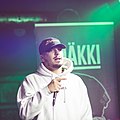 Jedidi



![Johanna Kylmänen [fi]](//upload.wikimedia.org/wikipedia/commons/thumb/3/30/Kalevan_Kisat_2018_-_Women%27s_100_m_-_Johanna_Kylm%C3%A4nen.jpg/60px-Kalevan_Kisat_2018_-_Women%27s_100_m_-_Johanna_Kylm%C3%A4nen.jpg) Johanna Kylmänen
Johanna Kylmänen![Esther Leander [fi]](//upload.wikimedia.org/wikipedia/commons/thumb/a/a9/Esther_Leander_13.5.2016.jpg/60px-Esther_Leander_13.5.2016.jpg) Esther Leander
Esther Leander




![Jesse Markin [fi]](//upload.wikimedia.org/wikipedia/commons/thumb/e/e1/The_Megaphone_State_at_Sello_library%2C_Finland_2011_2.jpg/60px-The_Megaphone_State_at_Sello_library%2C_Finland_2011_2.jpg) Jesse Markin
Jesse Markin



![Seyi Omojuwa [fi]](//upload.wikimedia.org/wikipedia/commons/thumb/7/7a/Seyi_Omojuwa_2008.jpg/60px-Seyi_Omojuwa_2008.jpg) Seyi Omojuwa
Seyi Omojuwa


![Anissa Pounds [fi]](//upload.wikimedia.org/wikipedia/commons/thumb/f/fc/Anissa_Pounds.jpg/60px-Anissa_Pounds.jpg) Anissa Pounds
Anissa Pounds![Dionne Pounds [fi]](//upload.wikimedia.org/wikipedia/commons/thumb/2/27/Dionne_Pounds_%28cropped%29.jpg/40px-Dionne_Pounds_%28cropped%29.jpg) Dionne Pounds
Dionne Pounds![Larry Pounds [fi]](//upload.wikimedia.org/wikipedia/commons/thumb/7/7b/Larry_Pounds.jpg/120px-Larry_Pounds.jpg) Larry Pounds
Larry Pounds![Maurizio Pratesi [fi]](//upload.wikimedia.org/wikipedia/commons/thumb/f/f6/Maurizio_Pratesi.jpg/60px-Maurizio_Pratesi.jpg) Maurizio Pratesi
Maurizio Pratesi![Prinssi Jusuf [fi]](//upload.wikimedia.org/wikipedia/commons/thumb/d/df/Lihamyrsky_-_YleX_Pop_2017_-_05.jpg/60px-Lihamyrsky_-_YleX_Pop_2017_-_05.jpg) Prinssi Jusuf
Prinssi Jusuf

![Seksikäs-Suklaa [fi]](//upload.wikimedia.org/wikipedia/commons/thumb/0/0c/Seksik%C3%A4s-Suklaa.jpg/120px-Seksik%C3%A4s-Suklaa.jpg) Seksikäs-Suklaa
Seksikäs-Suklaa

![Toinen Kadunpoika [fi]](//upload.wikimedia.org/wikipedia/commons/thumb/4/43/Erasmo_Amon_%28Egyptin_prinsessa%29_Director_Jan_Forsstr%C3%B6m.jpg/120px-Erasmo_Amon_%28Egyptin_prinsessa%29_Director_Jan_Forsstr%C3%B6m.jpg) Toinen Kadunpoika
Toinen Kadunpoika
![Ville Eetvartti [fi]](//upload.wikimedia.org/wikipedia/commons/thumb/7/7b/Ville_Eetvartti_studiossa_tammikuussa_2012.JPG/60px-Ville_Eetvartti_studiossa_tammikuussa_2012.JPG) Ville Eetvartti
Ville Eetvartti




.jpg)

.jpg)

![Marc Alingué [fi]](#/media/File:Kalevan_Kisat_2018_-_Men's_Triple_Jump_-_Iikka_Alingue_-_3_(cropped).jpg)
_(cropped).jpg)

.jpg)


![Abdissa Assefa [fi]](#/media/File:Abdissa_Assefa_-_Ilosaarirock_2009.jpg)

![Tidjân Ba [fi]](#/media/File:Tidjân_Ba_2017.jpg)
.jpg)


.jpg)
.jpg)

.jpg)
![Dosdela [fi]](#/media/File:Dosdela_2.jpg)


![Sara Francis [fi]](#/media/File:Kalevan_Kisat_2018_-_Women's_200_m_-_Sara_Francis.jpg)
.jpg)


![Gracias [fi]](#/media/File:Eurofestival_Gracias_3.jpg)
_(cropped).jpg)
![Henry Hanikka [fi]](#/media/File:Henry_hanikka_tammikuu_2024.jpg)
![Jimmy Hernandez [fi]](#/media/File:Jimmy_Hernandez.jpg)


.jpg)


_(cropped).jpg)
![Johanna Kylmänen [fi]](#/media/File:Kalevan_Kisat_2018_-_Women's_100_m_-_Johanna_Kylmänen.jpg)
![Esther Leander [fi]](#/media/File:Esther_Leander_13.5.2016.jpg)

_1899.jpg)


![Jesse Markin [fi]](#/media/File:The_Megaphone_State_at_Sello_library,_Finland_2011_2.jpg)


_by_Sandro_Halank–056.jpg)

.jpg)
![Seyi Omojuwa [fi]](#/media/File:Seyi_Omojuwa_2008.jpg)


![Anissa Pounds [fi]](#/media/File:Anissa_Pounds.jpg)
![Dionne Pounds [fi]](#/media/File:Dionne_Pounds_(cropped).jpg)
![Larry Pounds [fi]](#/media/File:Larry_Pounds.jpg)
![Maurizio Pratesi [fi]](#/media/File:Maurizio_Pratesi.jpg)
![Prinssi Jusuf [fi]](#/media/File:Lihamyrsky_-_YleX_Pop_2017_-_05.jpg)


![Seksikäs-Suklaa [fi]](#/media/File:Seksikäs-Suklaa.jpg)

.jpg)
![Toinen Kadunpoika [fi]](#/media/File:Erasmo_Amon_(Egyptin_prinsessa)_Director_Jan_Forsström.jpg)

![Ville Eetvartti [fi]](#/media/File:Ville_Eetvartti_studiossa_tammikuussa_2012.JPG)


- See also categories: Finnish people of African descent, Expatriates in Finland (African country subcategories) and Immigrants to Finland (African country subcategories)
Actors
- Fathi Ahmed (born 1991), actor and stand-up comedian of Somali descent[k][59][60][61]
- Alain Azerot, French Guianan-Martiniquais actor
- Celin El Azizi, half-Moroccan[l] actress[62][63][64]
- Caron Barnes (born 1961), British-born actress, singer and model of Jamaican descent
- Aaron Bojang (born 2001/2002), actor of African ancestry[65][66]
- Sofia Bryant (born 1999), actress of African-American descent[l][67][68][69]
- Billy Carson (born 1955), American-born African-American actor and drummer[70]
- Henry Hanikka (born 1964), half-Kenyan[l] actor[71]
- Pearl Hobson (1879–1919), American-born African-American actress, singer, dancer and cabaret artist in the Russian Empire
- Amira Khalifa (born 1974), half-Chadian[l] actress
- Ernest Lawson (born 1988), half-Togolese[l] actor[72]
- Matti Leino (born 1987), half-Kenyan[l] actor
- Kaisla Löyttyjärvi (born 1972), half-Cameroonian[l] actress
- Chike Ohanwe (born 1989), half-Nigerian[l] actor
- Diana Tenkorang (born 1989), Ghanaian-born actress
- Senna Vodzogbe, half-Ghanaian[l] actress
- Sue Willberg, Costa Rican-born actress[73][74]
Artists
Beauty pageant contestants
- Sofia Belórf (born 1990), half-Moroccan[l] Miss Helsinki 2010[81]
- Sara Chafak (born 1990), half-Moroccan-Berber[l] Miss Finland 2012
- Kelly Kalonji (born 1987), Congolese-born (DRC) Miss Helsinki 2013 and celebrity[82][83][84]
- Dana Mononen (born 1999/2000), half-Guadeloupean[l] Miss World Finland 2019[85][86]
- Lola Odusoga (born 1977), half-Nigerian[l] model, presenter and Miss Finland 1996
Dancers
Entrepreneurs
- Soraya Bahgat, social entrepreneur of Egyptian descent[k]
- Mohamed el-Fatatry (born 1984), Emirati-born entrepreneur of Egyptian descent
- Mateus Tembe (born 1974), Mozambican-born entrepreneur and director
Film people
- Khadar Ayderus Ahmed (born 1981), Somalian-born screenwriter and film director
- Jessie Chisi (born 1986/1987), Zambian-born film director and screenwriter[89][90][91]
- Ali Lacheb (born 1956), Algerian-born documentary film director
Journalists
Musicians
- Adi L Hasla (born 1991), half-Moroccan[l] hip hop musician
- Abdissa Assefa (born 1973), Ethiopian-born drummer and percussionist
- Tidjân Ba (born 1978), half-Senegalese[l] singer and actor
- Eric Bibb (born 1951), American-born African-American blues musician[95]
- Bizi (born 1994), half-Nigerian[l] hip hop musician[96][97]
- Eddie Boyd (1914–1994), American-born African-American blues pianist and singer
- Daco Junior (born 1990), Angolan-born musician[98][99]
- Raymond Ebanks (born 1970), half-Jamaican[l] musician
- Michael Ekeghasi (born 1985), Nigerian-born singer-songwriter[100][101]
- Lee Gaines (1914–1987), American-born African-American jazz singer
- Gracias (born 1987), Congolese-born (DRC) rapper
- Ikenna "Ike" Ikegwuonu (born 1988), singer and footballer of Nigerian descent[k][102][103]
- Jedidi (born 1995), half-Tunisian[l] DJ and hip hop musician
- Juno (born 1987), half-Kenyan[l] rapper
- KANI (born 1994), musician of Somalian descent[k]
- Noah Kin (born 1994), Norwegian-born half-Nigerian[l] rapper
- Kingfish (born 1991/1992), rapper of Somalian descent[k][104]
- George Kings (born 1953), Ghanaian-born musician and sex offender
- Mad Ice (born 1980), Ugandan-born singer-songwriter
- Mouhamadou L. Malang Cissokho (born 1962), Senegalese-born musician
- Jesse Markin (born 1985), Liberian-born musician[105]
- Rummy Nanji, Tanzanian-born singer known from the Finnish band Mighty 44[106]
- James Nikander (born 1990), half-Tanzanian[m] rapper, bodybuilder and Internet personality
- Norlan "El Misionario" (born late 1970s), Cuban-born musician[107]
- OX (born 1975), half-Egyptian[l] bass guitarist
- Pajafella (born 1992), rapper of Gambian descent[108][109]
- PapiPike (born 1987), Congolese-born rapper[110]
- Pete Parkkonen (born 1990), singer of partial Martiniquais descent[l][111]
- Prinssi Jusuf (born 1990), Ethiopian-born rapper
- Ismaila Sané (born 1956), Senegalese-born musician
- Isaac Sene (born 1997), half-Senegalese[l] singer[112]
- Sexmane (born 2000), half-Senegalese[l] singer and rapper
- Jackson Shuudifonya (born 1985), musician of Namibian descent, known from the Finnish band INDX[113][114]
- T.L, half-Jamaican[l] musician known from the Finnish band TCT[115]
- Mike Thomas (born 1950), Jamaican-born reggae musician
- Tiahu, half-Jamaican[l] musician known from the Finnish band TCT[115]
- Toinen Kadunpoika (born 1990), Angolan-born rapper
- Ville Eetvartti, singer-songwriter of partial Martiniquais descent[l][111]
- Mirel Wagner (born 1987), Ethiopian-born singer-songwriter
- Nicole Willis (born 1963), American-born African-American singer, songwriter and painter
- Yasmine Yamajako (born 1990/1991), half-Beninese[l] singer[116]
- Yeboyah (born 1996), half-Ghanaian[l] rapper[117][118][119][120]
Politicians
- Zahra Abdulla (born 1965), Somalian-born politician
- Abdirahman Mohamed Abdullahi (born 1955), Somalian-born politician[121][122]
- Fadumo Dayib (born 1972), Kenyan-born politician of Somalian descent[123]
- Fatim Diarra (born 1986), half-Malian[l] politician[124][125]
- Simon Ekpa (born 1985), Nigerian-born politician and political activist
- Batulo Essak (born 1967), Somalian-born politician
- Sari Essayah (born 1967), half-Moroccan[l] politician and racewalker
- Bella Forsgrén (born 1992), Ethiopian-born member of the Parliament of Finland
- Abdirahim Hussein (born 1978), Somalian-born radio journalist and politician
- Junes Lokka (born 1979), Moroccan-born activist and politician
- Aden Bulle Mohamud (died 2011), Somalian-born politician
- Suldaan Said Ahmed (born 1993), Somalian-born activist and politician
- Jani Toivola (born 1977), half-Kenyan[l] actor, dancer, presenter and member of the Parliament of Finland (2011–2019)
- Faysal Ali Warabe (born 1948), Somalian-born politician
Scientists
- Moncef Gabbouj (born 1962), Tunisian-born professor
- Kelsey Harrison (born 1933), Nigerian-born gynaecologist and researcher[126]
- Eugene Holman (born 1945), American-born African-American linguist and actor
- Mulki Mölsä (born 1958), Somalian-born physician and researcher[127]
Sportspeople
- William Alatalo (born 2002), half-Ethiopian[m] racing driver
- Marc Alingué (born 1999), half-Chadian[l] long jumper and triple jumper[128][129]
- Pierre Collura (born 1989), Malagasy-born sailor
- Seppo Evwaraye (born 1982), half-Nigerian[l] player of American football[130]
- Jimmy Hernandez (born 1982), Cuban-born volleyball player
- Mimosa Jallow (born 1994), half-Gambian[l] swimmer[131]
- Rachel Kauppila (born 1981/1982), Ethiopian-born exercise instructor[132]
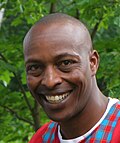
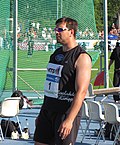
- Frantz Kruger (born 1975), White South African-born discus thrower
- Chris Mulumba (born 1992), player of American football of Congolese (DRC) descent[k]
- Michael Quarshie (born 1979), half-Ghanaian[l] player of American football
- Amina Saada (born 1989), half-Algerian[l] hammer thrower[133]
Basketball players
- Fiifi Aidoo (born 1996), Ghanaian-born basketball player
- Nanayaw Awuah-Addae (born 1984), Ghanaian-born basketball player
- Mustapha Amzil (born 2001), half-Moroccan[l] basketball player
- Sara Bejedi (born 2000), basketball player of Cameroonian-Moroccan descent[k][134][135][136]
- Kwamena Brace (born 1987), half-Ghanaian[l] basketball player[137]
- Aubrey Conerly (born 1983), American-born African-American basketball player[138]
- Federiko Federiko (born 2001), Egyptian-born basketball player of South Sudanese descent
- Jacob Grandison (born 1998), basketball player of African-American descent[l]
- Krista Gross (born 1990), basketball player of African-American descent[l]
- Bernard Harris (born 1950), American-born African-American basketball coach and basketball player
- Garcia Hopkins (born 1958), American-born African-American basketball player
- Shawn Hopkins (born 1995), basketball player of African-American descent[l]
- Leon Huff (born 1950), American-born African-American basketball coach and basketball player
- Shawn Huff (born 1984), basketball player of African-American descent[l]
- Pierre Jallow (born 1979), Gambian-born basketball player
- Greg Joyner (born 1957), American-born African-American basketball coach and basketball player
- Awak Kuier (born 2001), Egyptian-born basketball player of South Sudanese descent[139][140][141]
- Cedric Latimer (born 1987), basketball player of African-American descent[l]
- Ervin Latimer (born 1952), American-born African-American entrepreneur and basketball player
- Gerald Lee Jr. (born 1987), basketball player of African-American descent[l]
- Gerald Lee Sr. (born 1951), American-born African-American basketball coach and basketball player
- La Trice Little (born 1979), American-born African-American basketball player
- Miro Little (born 2004), basketball player of African-American descent[l]
- Jonathan Moore (born 1957), American-born African-American basketball player
- Marcel Moore (born 1994), basketball player of African-American descent[l]
- Michaela Moua (born 1976), half-Ivorian[l] basketball player[142]
- Olivier Nkamhoua (born 2000), half-Cameroonian[l] basketball player
- Anissa Pounds (born 1992), basketball player of African-American descent[l]
- Dionne Pounds (born 1984), basketball player of African-American descent[l]
- Larry Pounds (born 1953), American-born African-American basketball coach and basketball player
- Michael Pounds (born 1988), basketball player of African-American descent[l]
- Maurizio Pratesi (born 1975), half-Jamaican[l] basketball player[143]
- Thomas Tumba (born 2001), Congolese-born (DRC) basketball player
- Damon Williams (born 1973), American-born African-American basketball player
- Jamar Wilson (born 1984), American-born African-American basketball player
Footballers
- Nosh A Lody (born 1989), Congolese-born (DRC) footballer
- Zakaria Abahassine (born 1988), half-Moroccan[l] footballer
- Bakr Abdellaoui (born 1997), half-Moroccan[l] footballer
- Seth Ablade (born 1983), Ghanaian-born footballer[144]
- Abdulkadir Said Ahmed (born 1999), Somalian-born footballer
- Nikolai Alho (born 1993), half-Ghanaian[l] footballer[145]
- Christian Aniche Izuchukwu (born 1981), Nigerian-born footballer[146][147][148]
- Samuel Anini Junior (born 2002), footballer of Ghanaian descent[k]
- Nnaemeka Anyamele (born 1994), footballer of Nigerian descent[k]
- Roosa Ariyo (born 1994), half-Nigerian[l] footballer[149]
- Felipe Aspegren (born 1994), Colombian-born footballer
- Jasin-Amin Assehnoun (born 1998), half-Moroccan[l] footballer
- Serge Atakayi (born 1999), Congolese-born (DRC) footballer
- Artur Atarah (born 2005), half-Ghanaian[l] footballer
- Robbie Azodo (born 2001), half-Nigerian[l] footballer
- Enoch Banza (born 2000), footballer of Congolese (DRC) descent[k]
- Patrick Bantamoi (born 1986), Sierra Leonean-born football goalkeeper
- Michael Boamah (born 2003), American-born footballer of Ghanaian and African-American descent
- Moshood Bola (born 1968), Nigerian-born football manager and footballer[150]
- Sonosi Daldum (born 2007), footballer of Sudanese descent[k]
- Yassin Daoussi (born 2000), half-Moroccan footballer
- Bajung Darboe (born 2006), Gambian-born footballer
- Bob Diasonama (born 1996), footballer of Angolan descent
- Solomon Duah (born 1993), footballer of Ghanaian descent[k]
- Adel Eid (born 1984), half-Egyptian[l] footballer
- Amos Ekhalie (born 1988), Kenyan-born footballer
- Iidle Elmi (born 1995), Somalian-born footballer
- David Ezeh (born 2006), half-Nigerian[l] footballer
- Cheyne Fowler (born 1982), half-White South African[l] footballer
- Fabrice Gatambiye (born 2000), Congolese-born (DRC) footballer[151][152]
- Niko Hämäläinen (born 1997), American-born footballer of African-American descent[m][153]
- Gershon Henry (born 2006), Ghanaian-born footballer
- Nora Heroum (born 1994), half-Moroccan[l] footballer
- Segun Ikudehinbu (born 1989), Nigerian-born footballer[154][155]
- Abaas Ismail (born 1998), footballer of Somalian descent[k]
- Omar Jama (born 1998), footballer of Somalian descent[k]
- Yusuf Jama (born 1993), footballer of Somalian descent[k]
- Glen Kamara (born 1995), footballer of Sierra Leonean descent[k][156]
- Omar Khary (born 1995), half-Sudanese[l] footballer[157]
- Zakaria Kibona (born 1990), Tanzanian-born football manager and footballer
- Kevin Kouassivi-Benissan (born 1999), footballer of Togolese descent[k][158]
- Akon Kuek (born 2004), footballer of South Sudanese descent
- Settyslas Loutelamio (born 1994), Congolese-born (ROC) footballer
- Didis Lutumba-Pitah (born 1998), footballer of Congolese (DRC) descent
- Joslyn Luyeye-Lutumba (born 2002), footballer of Congolese (DRC) descent
- Jean-Claude Mabinda (born 2000), half-Congolese (DRC)[l] footballer
- Mustafa Maki (born 1988), Sudanese-born footballer
- Jeremie Malolo (born 1991), Congolese-born (DRC) footballer
- Obed Malolo (born 1997), footballer of Congolese (DRC) descent[k]
- Robbie Malolo (born 2001), footballer of Congolese (DRC) descent
- Henri Malundama (born 1995), footballer of Cameroonian-Congolese descent[k]
- Sakari Mattila (born 1989), half-Algerian[l] footballer[159]
- Aristote Mboma (born 1994), Congolese-born (DRC) footballer
- Medo (born 1987), Sierra Leonean-born footballer
- Adam Mekki (born 2002), half-Algerian footballer
- Tony Miettinen (born 2002), Kenyan-born footballer
- Abukar Mohamed (born 1999), Somalian-born footballer
- Hussein Mohamed (born 1997), Somalian-born footballer
- Kevin Mombilo (born 1993), Congolese-born (DRC) footballer
- Mehdi El Moutacim (born 2000), half-Moroccan[l] footballer[160]
- Jonathan Muzinga (born 2002), footballer of Congolese (DRC) descent[k]
- Kelechukwu Nnajiofor (born 1990), Nigerian-born footballer[161][162]
- Djoully Nzoko (born 2007), footballer of Congolese (DRC) descent
- Echiabhi Okodugha (born 1988), Nigerian-born footballer[163][164]
- Anthony Olusanya (born 2000), half-Nigerian[l] footballer
- Nicholas Otaru (born 1986), half-Nigerian[l] footballer
- Prince Otoo (born 1985), Ghanaian-born footballer
- Emmanuel Patut (born 2003), footballer of South Sudanese descent
- Steven Polack (born 1961), English-born footballer and football manager of West Indian descent[165][166]
- Youness Rahimi (born 1995), half-Moroccan[l] footballer[167]
- Sami Rähmönen (born 1987), half-Moroccan footballer
- David Ramadingaye (born 1989), half-Chadian[l] footballer[168]
- Sharp Räsänen (born 1999), footballer of Nigerian descent
- Klebér Saarenpää (born 1975), Swedish-born half-Guinean[m] football manager and footballer[169][citation needed]
- Ahmed Said Ahmed (born 1998), Somalian-born footballer[170]
- Momodou Sarr (born 2000), footballer of Gambian descent
- Mauro Severino (born 1999), Angolan-born footballer[171][172][173]
- Samba Sillah (born 1999), half-Gambian footballer
- Pyry Soiri (born 1994), half-Namibian[l] footballer
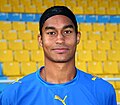
- Malick Thiaw (born 2001), half-Senegalese[l] footballer
- Robin Tihi (born 2002), Swedish-born half-Moroccan[l] footballer[174]
- Henry Chidozie Ugwunna (born 1989), Nigerian-born footballer[175]
- Vincent Ulundu (born 2005), half-Congolese (DRC) footballer
- Babatunde Wusu (born 1984), Nigerian-born footballer
- Gullit Zolameso (born 1995), Angolan-born footballer
Ice hockey players
- Semir Ben-Amor (born 1982), half-Tunisian[l] ice hockey player
- Josef Boumedienne (born 1978), half-Algerian[l] ice hockey player
- Christopher Gibson (born 1992), half-Saint Lucian[l] ice hockey goaltender
- Bernard Isiguzo (born 1999), half-Nigerian[l] ice hockey player
- Matti Lamberg (born 1993), half-Moroccan-Berber[l] ice hockey player
- Joonas Oden (born 2000), ice hockey player of African-American descent[l][176][177]
- Markus Oden (born 2001), ice hockey player of African-American descent[l][176][177]
Martial artists
- Amin Asikainen (born 1976), half-Moroccan[l] boxer
- Sonia Grönroos (born 1984), half-Algerian[l] boxer
- Dayron Lester (born 1986), Cuban-born boxer
- Faye Njie (born 1993), half-Gambian[l] judoka
- Kimmo Obiora (born 1975), half-Nigerian[l] karateka
- Nourdeen Toure (born 1991), Togolese-born boxer and Refugee Man of the Year for 2019[178]
- Frank Zoko Ble (born 1975), Ivorian-born murderer and karateka
Runners
- Kennedy Charicha (born 1996), South Sudanese-born long-distance runner
- Amira Chokairy (born 1995), half-Moroccan[l] sprinter[179]
- Sara Francis (born 2000), sprinter of Jamaican descent[l][180]
- Francis Kirwa (born 1974), Kenyan-born long-distance runner
- Wilson Kirwa (born 1974), Kenyan-born runner and writer
- Stefan Koivikko (born 1975), half-Nigerian[l] sprinter
- Billy Konchellah (born 1961), Kenyan-born middle-distance runner
- Lewis Korir (born 1986), Kenyan-born long-distance runner
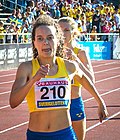
- Johanna Kylmänen (born 2002), Colombian-born sprinter[181]
- Mustafe Muuse (born 2001), long-distance runner of Somalian descent[k][182]
- Yolanda Ngarambe (born 1991), half-Rwandan[l] middle-distance runner
- Seyi Omojuwa (born 1985), Nigerian-born sprinter
- Willy Rotich (born 1976), Kenyan-born long-distance runner
Writers
- Ronald Fair (1932–2018), American-born African-American writer and sculptor
- Nura Farah (born 1979), Somalian-born writer
- Ranya Paasonen (born 1974), half-Egyptian[l] writer
Others
- Farhia Abdi (born 1972/1973), Somalian-born Refugee Woman of the Year for 2020[183][184]
- Maryan Abdulkarim (born 1982), Somalian-born activist
- Aki Abiodun (born 1971), half-Nigerian[l] contestant on the Finnish version of Big Brother and presenter[185][186]
- Ujuni Ahmed (born 1987), Somalian-born activist[187][188][189][190]
- François Bazaramba (born 1951), Rwandan-born criminal who was sentenced to life imprisonment in Finland for participating in the Rwandan genocide
- Dosdela (born 1993), media personality, YouTuber and musician of Somalian descent[k][191][192]
- Abdiqadir Osman Hussein (born 1974), Somalian-born murderer and sex offender
- Tea Khalifa (born 1977), half-Chadian[l] presenter[185]
- Langry (born 1940), Moroccan-born circus performer
- Esther Leander (born 1970), Kenyan-born project manager and Refugee Woman of the Year for 1999
- Rosa Lemberg (1875–1959), half-Bantu teacher, choral conductor and theatre director from Ovamboland[13]
- Gibril Massaquoi (born 1970), Sierra Leonean-born detainee
- Amran Mohamed Ahmed (born 1954), Somalian-born Refugee Woman of the Year for 2005[193]
- Saido Mohamed (born 1974), Somalian-born Refugee Woman of the Year for 2011
- Michele Murphy-Kaulanen (born 1980), celebrity of African-American descent[l] and the wife of Sampo Kaulanen, a celebrity and the manager of Jounin Kauppa[194][195]
- Daniela Owusu (born 2004), half-Ghanaian,[l] first black woman to portray Saint Lucy in Finland's national Saint Lucy's Day celebrations[196]
- Rudolf Prüss (1903–1940), Latvian-born soldier of African ancestry
- Nimo Samatar (born 1995), contestant on the Finnish version of Big Brother and blogger of Somalian descent[k][197][198][199]
- Seksikäs-Suklaa (born 1992), Angolan-born media personality, YouTuber, presenter and musician
- Steven Thomas (born 1961), American-born African-American sex offender
- Leyla Väänänen (born 1992), half-Somalian[m] contestant on the Finnish version of Big Brother[200][201]
- Fatima Verwijnen (born 1993/1994), half-Somalian[l] human rights activist[202][203][204]
People of the Finnish diaspora with African ancestry


![Tiffany Kronlöf [sv]](//upload.wikimedia.org/wikipedia/commons/thumb/b/b1/Portr%C3%A4tt_Tiffany_Full_Patte_s.2.jpg/60px-Portr%C3%A4tt_Tiffany_Full_Patte_s.2.jpg) Tiffany Kronlöf
Tiffany Kronlöf


![Roli-Ann Neubauer [de]](//upload.wikimedia.org/wikipedia/commons/thumb/7/75/Nikagbatsewiki.JPG/60px-Nikagbatsewiki.JPG) Roli-Ann Neubauer
Roli-Ann Neubauer





.jpg)
.jpg)
_2023.jpg)

![Tiffany Kronlöf [sv]](#/media/File:Porträtt_Tiffany_Full_Patte_s.2.jpg)


![Roli-Ann Neubauer [de]](#/media/File:Nikagbatsewiki.JPG)


.jpeg)

.jpg)


This list is for notable people of African ancestry who also belong to the Finnish diaspora (i.e. Finnish emigrants and their descendants) but do not hold Finnish citizenship. Many of them maintain their ties to Finland.
The Gambia
- Aminata Barrow (born 2004), half-Gambian[l] swimmer
Germany
- Misan Haldin (born 1982), half-Nigerian[l] basketball player
- Roli-Ann Neubauer (born 1984), half-Nigerian[l] basketball player
Norway
- Solfrid Koanda (born 1998), half-Ivorian[l] weightlifter
Sweden
- Patrick Amoah (born 1986), half-Ghanaian[l] footballer
- Ali Boulala (born 1979), half-Algerian[l] skateboarder
- Sascha Boumedienne (born 2007), ice hockey player of Algerian descent[l]
- Pia Conde (born 1970), half-Cuban[l] journalist
- Mehdi Ghezali (born 1979), half-Algerian[l] detainee of the Guantanamo Bay detention camp
- Jean-Louis Huhta (born 1965), half-Trinidadian[l] musician
- Aino Jawo (born 1986), half-Gambian[l] singer
- Monir Kalgoum (born 1984), half-Tunisian[l] ice hockey player[205]
- Janice Kavander (born 1994), half-Ugandan[l] singer
- Bianca Kronlöf (born 1985), actress of Afro-Trinidadian descent[m]
- Tiffany Kronlöf (born 1987), actress, musician and screenwriter of Afro-Trinidadian descent[m][206][207][208][209]
- Elizabeth and Victoria Lejonhjärta (born 1990), half-Gambian-Senegalese-Sierra Leonean[l] twin models, bloggers, writers and social media personalities
- Kerim Mrabti (born 1994), half-Tunisian[l] footballer
- Näääk (born 1983), half-Gambian[l] rapper
- Sam-E, half-Tunisian[l] hip hop musician
- Rami Shaaban (born 1975), half-Egyptian[l] footballer
- Adam Tensta (born 1983), half-Gambian[l] rapper
- Demba Traoré (born 1982), half-Malian[l] footballer
United Kingdom
- Alex Sawyer (born 1993), half-Ghanaian[m] actor
- Marc Wadsworth (born 1955), half-Jamaican[l] activist and journalist
United States
- Tyra Banks (born 1973), African-American television personality, model, producer, businesswoman, actress and author[210]
- Drew Gooden (born 1981), African-American[l] basketball player
- Carla Harvey (born 1976), African-American[l] singer[211]
- Jillian Hervey (born 1989), African-American singer and dancer
- Allan Mansoor (born 1964), half-Egyptian[l] politician
- Dan O'Brien (born 1966), African-American[l] decathlete and Olympic gold medalist[212]
- Redfoo (born 1975), African-American[l] musician
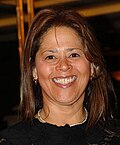
- Anna Deavere Smith (born 1950), African-American actress, playwright and professor[213]
- Denzel Wells (born 1990), African-American player of American football, actor and contestant on the season 21 of America's Next Top Model[214][215][216]
- Chris Williams (born 1967), African-American actor
- Vanessa Williams (born 1963), African-American singer, actress, fashion designer and Miss America 1984
Notes
- I.e., according to Statistics Finland, people in Finland:
• whose both parents are African-born,
• or whose only known parent was born in Africa,
• or who were born in Africa and whose parents' countries of birth are unknown.[1]
Thus, for example, people with one Finnish parent and one African parent or people with more distant African ancestry are not included in this country-based non-ethnic figure.
Also, African-born adoptees' backgrounds are determined by their adoptive parents, not by their biological parents.[1] - I.e., all other African countries but Algeria, Egypt, Libya, Morocco, Sudan and Tunisia.
- I.e., according to Statistics Finland, people in Finland:
• whose both parents are Sub-Saharan[c] African-born,
• or whose only known parent was born in Sub-Saharan Africa,
• or who were born in Sub-Saharan Africa and whose parents' countries of birth are unknown.[1]
Thus, for example, people with one Finnish parent and one Sub-Saharan African parent or people with more distant Sub-Saharan African ancestry are not included in this country-based non-ethnic figure.
Also, Sub-Saharan African-born adoptees' backgrounds are determined by their adoptive parents, not by their biological parents.[1] - South Sudan was not independent in 1990; see the number of Sudan.
- I.e., according to Statistics Finland, people in Finland:
• whose both parents are born in those countries,
• or whose only known parent was born in those countries,
• or who were born in those countries and whose parents' countries of birth are unknown.[1]
Thus, for example, people with one Finnish parent and one parent from those countries or people with more distant ancestry from those countries are not included in this country-based non-ethnic figure.
Also, adoptees born in those countries have their backgrounds determined by their adoptive parents, not by their biological parents.[1] - It is not specified in the source to what "Congo" (Kongo) refers to, but it could possibly refer to any of the following four countries: the Democratic Republic of the Congo, People's Republic of the Congo, Republic of the Congo or Zaire.
- Literally "People's Democratic Republic of the Congo" in the source, but such country has never existed. It could possibly refer to the People's Republic of the Congo.
- Statistics Finland: "Citizenships are specified in the table if the number of people in the citizenship group exceeds 99 in 2018."[36] Thus, the statistics are not available for the following 31 countries: Benin, Botswana, Burkina Faso, Burundi, Cape Verde, Central African Republic, Chad, Comoros, Republic of the Congo, Djibouti, Equatorial Guinea, Eswatini, Gabon, Guinea, Guinea-Bissau, Ivory Coast, Lesotho, Liberia, Madagascar, Malawi, Mali, Mauritania, Mauritius, Mozambique, Niger, São Tomé and Príncipe, Seychelles, Sierra Leone, South Sudan, Togo and Zimbabwe.
- Austria, Denmark, Finland, France, Germany, Ireland, Italy, Luxembourg, Malta, Portugal, Sweden and the United Kingdom.
- Ancestry; born in Finland.
- On their father's side; ethnic Finnish descent on the mother's side.
- On their mother's side; ethnic Finnish descent on the father's side.
.svg)
