Portal:Medicine
From Wikipedia, the free encyclopedia

The Medicine Portal

Medicine is the science and practice of caring for patients, managing the diagnosis, prognosis, prevention, treatment and palliation of their injury or disease, while promoting their health. Medicine encompasses a variety of health care practices which evolved to maintain and restore health through the prevention and treatment of illness and infection. Contemporary medicine applies biomedical sciences, biomedical research, genetics, and medical technology to diagnose, treat, and prevent injury and disease, typically through various pharmaceuticals or surgery, but also through therapies such as psychotherapy, external splints and traction, medical devices, biologics, and ionizing radiation, amongst others.
Medicine has been practiced since prehistoric times, and for most of this time it was an art (an area of creativity and skill), frequently having connections to the religious and philosophical beliefs of local culture. For example, a medicine man would apply herbs and say prayers for healing, or an ancient philosopher and physician would apply bloodletting according to the theories of humorism, or the four humors. In recent centuries, since the advent of modern science, most medicine has become a combination of art and science (both basic and applied, under the umbrella of medical science). For example, while stitching technique for sutures is an art learned through practice, knowledge of what happens at the cellular and molecular level in the tissues being stitched arises through science.
Prescientific forms of medicine, now known as traditional medicine or folk medicine, remain commonly used in the absence of scientific medicine and are thus called alternative medicine. Alternative treatments outside of scientific medicine with ethical, safety and efficacy concerns are termed quackery or being based on fringe science. (Full article...)
 Featured articles -


Mary Mallon (September 23, 1869 – November 11, 1938), commonly known as Typhoid Mary, was an Irish-born cook who lived in the United States from a young age and is believed to have infected up to fifty-seven people with the bacteria that cause typhoid fever. The infections caused three confirmed deaths. She was the first person in the U.S. to be identified as an asymptomatic carrier of Salmonella Typhi bacteria.
Between 1897 and 1907, Mallon worked at the houses of several New York-based families; members of four of the households contracted typhoid. An investigation by George Soper, an epidemiologist at the New York Department of Health, identified Mallon as the potential disease vector. In 1907, she was forcibly quarantined at the Riverside Hospital, an institution for those with quarantinable diseases, on North Brother Island in New York City's East River. She was released in 1910 after she swore to report to the health department every quarter and not return to cooking as a career. (Full article...)
Rotaviruses are the most common cause of diarrhoeal disease among infants and young children. Nearly every child in the world is infected with a rotavirus at least once by the age of five. Immunity develops with each infection, so subsequent infections are less severe. Adults are rarely affected.
The virus is transmitted by the faecal–oral route. It infects and damages the cells that line the small intestine and causes gastroenteritis. Although rotavirus was discovered in 1973 by Ruth Bishop and her colleagues by electron micrograph images and accounts for about one-third of hospitalisations for severe diarrhoea in infants and children, its importance has historically been underestimated within the public health community, particularly in developing countries. In addition to its impact on human health, rotavirus also infects other animals, and is a pathogen of livestock. (Full article...)
A virus is a submicroscopic infectious agent that replicates only inside the living cells of an organism. Viruses infect all life forms, from animals and plants to microorganisms, including bacteria and archaea. Viruses are found in almost every ecosystem on Earth and are the most numerous type of biological entity. Since Dmitri Ivanovsky's 1892 article describing a non-bacterial pathogen infecting tobacco plants and the discovery of the tobacco mosaic virus by Martinus Beijerinck in 1898, more than 16,000 of the millions of virus species have been described in detail. The study of viruses is known as virology, a subspeciality of microbiology.
When infected, a host cell is often forced to rapidly produce thousands of copies of the original virus. When not inside an infected cell or in the process of infecting a cell, viruses exist in the form of independent viral particles, or virions, consisting of (i) genetic material, i.e., long molecules of DNA or RNA that encode the structure of the proteins by which the virus acts; (ii) a protein coat, the capsid, which surrounds and protects the genetic material; and in some cases (iii) an outside envelope of lipids. The shapes of these virus particles range from simple helical and icosahedral forms to more complex structures. Most virus species have virions too small to be seen with an optical microscope and are one-hundredth the size of most bacteria. (Full article...)
Cholangiocarcinoma, also known as bile duct cancer, is a type of cancer that forms in the bile ducts. Symptoms of cholangiocarcinoma may include abdominal pain, yellowish skin, weight loss, generalized itching, and fever. Light colored stool or dark urine may also occur. Other biliary tract cancers include gallbladder cancer and cancer of the ampulla of Vater.
Risk factors for cholangiocarcinoma include primary sclerosing cholangitis (an inflammatory disease of the bile ducts), ulcerative colitis, cirrhosis, hepatitis C, hepatitis B, infection with certain liver flukes, and some congenital liver malformations. Most people have no identifiable risk factors. The diagnosis is suspected based on a combination of blood tests, medical imaging, endoscopy, and sometimes surgical exploration. The disease is confirmed by examination of cells from the tumor under a microscope. It is typically an adenocarcinoma (a cancer that forms glands or secretes mucin). (Full article...)
Major General Rupert Major Downes, (10 February 1885 – 5 March 1945) was an Australian soldier, surgeon and historian.
The son of British Army officer Major Francis Downes, Downes joined the Australian Army as a trumpeter while he was still at school. He attended the University of Melbourne, graduating with his medical degrees in 1907 and a Doctor of Medicine degree in 1911. He was commissioned as a captain in the Australian Army Medical Corps in 1908, and after the outbreak of World War I he joined the First Australian Imperial Force (AIF) in 1914 as its youngest lieutenant colonel. He served in the Gallipoli campaign, and was appointed Assistant Director of Medical Services (ADMS) of the newly formed Anzac Mounted Division in 1916, which he combined with the post of ADMS AIF Egypt. In 1917, he became Deputy Director of Medical Services (DDMS) of the Desert Mounted Corps. After the war, he wrote articles on medical aspects of the Sinai and Palestine campaign, and the section on the campaign for the Official History of Australia in the War of 1914–1918. (Full article...)- Ray Fletcher Farquharson MBE (4 August 1897 – 1 June 1965) was a Canadian medical doctor, university professor, and medical researcher. Born in Claude, Ontario, he attended and taught at the University of Toronto for most of his life, and was trained and employed at Toronto General Hospital. With co-researcher Arthur Squires, Farquharson was responsible for the discovery of the Farquharson phenomenon, an important principle of endocrinology, which is that administering external hormones suppresses the natural production of that hormone.
He served in the First and Second World Wars, earning appointment as a Member of the Order of the British Empire for his medical work during the latter. He chaired the Penicillin Committee of Canada and served as a medical consultant for the Royal Canadian Air Force. He was awarded the Queen's Coronation Medal in 1953 for his work for the Defence Review Board. Farquharson was also a charter member of the Royal College of Physicians and Surgeons of Canada. (Full article...)
Buruli ulcer (/bəˈruːli/) is an infectious disease characterized by the development of painless open wounds. The disease is limited to certain areas of the world, with most cases occurring in Sub-Saharan Africa and Australia. The first sign of infection is a small painless nodule or area of swelling, typically on the arms or legs. The nodule grows larger over days to weeks, eventually forming an open ulcer. Deep ulcers can cause scarring of muscles and tendons, resulting in permanent disability.
Buruli ulcer is caused by skin infection with bacteria called Mycobacterium ulcerans. The mechanism by which M. ulcerans is transmitted from the environment to humans is not known but may involve the bite of an aquatic insect or the infection of open wounds. Once in the skin, M. ulcerans grows and releases the toxin mycolactone, which blocks the normal function of cells, resulting in tissue death and immune suppression at the site of the ulcer. (Full article...)- Paul Nobuo Tatsuguchi (辰口 信夫, Tatsuguchi Nobuo), sometimes mistakenly referred to as Nebu Tatsuguchi (August 31, 1911 – May 30, 1943), was a Japanese soldier and surgeon who served in the Imperial Japanese Army (IJA) during World War II. He was killed during the Battle of Attu on Attu Island, Alaska, United States, on May 30, 1943.
A devout Seventh-day Adventist, Tatsuguchi studied medicine and was licensed as a physician in the United States (US). He returned to his native Japan to practice medicine at the Tokyo Adventist Sanitarium, where he received further medical training. In 1941, he was ordered to cease his medical practice and conscripted into the IJA as an acting medical officer, although he was given an enlisted rather than officer rank because of his American connections. In late 1942, Tatsuguchi was sent to Attu, which had been occupied by Japanese forces in June 1942. On May 11, 1943, The United States Army landed on the island, intending to retake American soil from the Japanese. (Full article...)
Major depressive disorder (MDD), also known as clinical depression, is a mental disorder characterized by at least two weeks of pervasive low mood, low self-esteem, and loss of interest or pleasure in normally enjoyable activities. Introduced by a group of US clinicians in the mid-1970s, the term was adopted by the American Psychiatric Association for this symptom cluster under mood disorders in the 1980 version of the Diagnostic and Statistical Manual of Mental Disorders (DSM-III), and has become widely used since. The disorder causes the second-most years lived with disability, after lower back pain.
The diagnosis of major depressive disorder is based on the person's experiences, and behavior reported by family or friends, and a mental status examination. There is no laboratory test for the disorder, but blood testing and similar may be done to rule out physical conditions that can cause similar symptoms. The most common time of onset is in a person's 20s. Men are much less likely to report than women, with approximately 33.2% of men and 43.0% of women with depressive symptoms reporting seeking help, possibly due to pressures of masking for men. The course of the disorder varies widely, from one episode lasting months to a lifelong disorder with recurrent episodes. (Full article...)
John Rolph (4 March 1793 – 19 October 1870) was a Canadian physician, lawyer, and political figure. As a politician, he was considered the leader of the Reform faction in the 1820s and helped plan the Upper Canada Rebellion. As a doctor, he founded several medical schools and incorporated new teaching techniques and medical procedures into his lectures. However, his actions against rival medical schools decreased public confidence in the ability of medical professionals to regulate themselves.
Rolph grew up in England and was educated in medicine and law. He immigrated to Upper Canada in 1813 and lived on his father's farm in Port Talbot, where he practiced law and medicine concurrently and opened a medical school called the Talbot Dispensary. In 1824, Rolph was elected to the Parliament of Upper Canada and returned to England to petition the Colonial Office to allow the naturalization of American citizens in Canada. He was elected as an alderman to Toronto's first city council, though he resigned after his council colleagues did not select him to be the city's mayor. (Full article...)
Helicobacter pylori, previously known as Campylobacter pylori, is a gram-negative bacterium best known for its role in causing gastric ulcers in the human stomach. Its helical body (from which the genus name Helicobacter derives) is thought to have evolved to penetrate the mucous lining of the stomach, helped by its flagella, and thereby establish infection. Mutants can have a rod or curved rod shape that exhibits less virulence. While many earlier reports of an association between bacteria and the ulcers had existed, such as the works of John Lykoudis, it was only in 1983 when the bacterium was formally described for the first time in the English-language literature as the causal agent of gastric ulcers by Australian physician-scientists Barry Marshall and Robin Warren. In 2005, the pair was awarded the Nobel Prize in Physiology or Medicine for their discovery.
Infection of the stomach with H. pylori does not necessarily cause illness: over half of the global population is infected, but most individuals are asymptomatic. Persistent colonization with more virulent strains can induce a number of gastric and non-gastric disorders. Gastric disorders due to infection begin with gastritis, or inflammation of the stomach lining. When infection is persistent, the prolonged inflammation will become chronic gastritis. Initially, this will be non-atrophic gastritis, but the damage caused to the stomach lining can bring about the development of atrophic gastritis and ulcers within the stomach itself or the duodenum (the nearest part of the intestine). At this stage, the risk of developing gastric cancer is high. However, the development of a duodenal ulcer confers a comparatively lower risk of cancer. Helicobacter pylori are class 1 carcinogenic bacteria, and potential cancers include gastric MALT lymphoma and gastric cancer. Infection with H. pylori is responsible for an estimated 89% of all gastric cancers and is linked to the development of 5.5% of all cases of cancers worldwide. H. pylori is the only bacterium known to cause cancer. (Full article...)
Oliver Wendell Holmes Sr. (/hoʊmz/; August 29, 1809 – October 7, 1894) was an American physician, poet, and polymath based in Boston. Grouped among the fireside poets, he was acclaimed by his peers as one of the best writers of the day. His most famous prose works are the "Breakfast-Table" series, which began with The Autocrat of the Breakfast-Table (1858). He was also an important medical reformer. In addition to being an author and a poet, Holmes was also a physician, professor, lecturer, and inventor.
Born in Cambridge, Massachusetts, Holmes was educated at Phillips Academy and Harvard College. After graduating from Harvard in 1829, he briefly studied law before turning to the medical profession. He began writing poetry at an early age; one of his most famous works, "Old Ironsides", was published in 1830 and was influential in the eventual preservation of the USS Constitution. Following training at the prestigious medical schools of Paris, Holmes was granted his Doctor of Medicine degree from Harvard Medical School in 1836. He taught at Dartmouth Medical School before returning to teach at Harvard and, for a time, served as dean there. During his long professorship, he became an advocate for various medical reforms and notably posited the then-controversial idea that doctors were capable of carrying puerperal fever from patient to patient. Holmes retired from Harvard in 1882 and continued writing poetry, novels and essays until his death in 1894. (Full article...)
Menstrual cycle
The menstrual cycle is a series of natural changes in hormone production and the structures of the uterus and ovaries of the female reproductive system that makes pregnancy possible. The ovarian cycle controls the production and release of eggs and the cyclic release of estrogen and progesterone. The uterine cycle governs the preparation and maintenance of the lining of the uterus (womb) to receive an embryo. These cycles are concurrent and coordinated, normally last between 21 and 35 days, with a median length of 28 days. Menarche (the onset of the first period) usually occurs around the age of 12 years; menstrual cycles continue for about 30–45 years.
Naturally occurring hormones drive the cycles; the cyclical rise and fall of the follicle stimulating hormone prompts the production and growth of oocytes (immature egg cells). The hormone estrogen stimulates the uterus lining (endometrium) to thicken to accommodate an embryo should fertilization occur. The blood supply of the thickened lining provides nutrients to a successfully implanted embryo. If implantation does not occur, the lining breaks down and blood is released. Triggered by falling progesterone levels, menstruation (commonly referred to as a "period") is the cyclical shedding of the lining, and is a sign that pregnancy has not occurred. (Full article...)
William Samuel Sadler (June 24, 1875 – April 26, 1969) was an American surgeon, self-trained psychiatrist, and author who helped publish The Urantia Book. The book is said to have resulted from Sadler's relationship with a man through whom he believed celestial beings spoke at night. It drew a following of people who studied its teachings.
A native of Indiana, Sadler moved to Michigan as a teenager to work at the Battle Creek Sanitarium. There he met the physician and health-food promoter John Harvey Kellogg, co-inventor of corn flakes breakfast cereal, who became his mentor. Sadler married Kellogg's niece, Lena Celestia Kellogg, in 1897. He worked for several Christian organizations and attended medical school, graduating in 1906. Sadler practiced medicine in Chicago with his wife, who was also a physician. He joined several medical associations and taught at the McCormick Theological Seminary. Although he was a committed member of the Seventh-day Adventist Church for almost twenty years, he left the denomination after it disfellowshipped his wife's uncle, John Harvey Kellogg, in 1907. Sadler and his wife became speakers on the Chautauqua adult education circuit in 1907, and he became a highly paid, popular orator. He eventually wrote over 40 books on a variety of medical and spiritual topics advocating a holistic approach to health. Sadler extolled the value of prayer and religion but was skeptical of mediums, assisting debunker Howard Thurston, and embraced the scientific consensus on evolution. (Full article...)
In 1984, 751 people suffered food poisoning in The Dalles, Oregon, United States, due to the deliberate contamination of salad bars at ten local restaurants with Salmonella. A group of prominent followers of Rajneesh (also known as Osho) led by Ma Anand Sheela had hoped to incapacitate the voting population of the city so that their own candidates would win the 1984 Wasco County elections. The incident was the first and largest bioterrorist attack in U.S. history.
Rajneesh's followers had previously gained political control of Antelope, Oregon, as they were based in the nearby intentional community of Rajneeshpuram, and they now sought election to two of the three seats on the Wasco County Circuit Court that were up for election in November 1984. Some Rajneeshpuram officials feared that they would not get enough votes, so they decided to incapacitate voters in The Dalles, the largest population center in Wasco County. The chosen biological agent was Salmonella enterica Typhimurium, which was first delivered through glasses of water to two county commissioners and then at salad bars and in salad dressing. (Full article...)


Selected image –

Photo credit: User Arthroscopist on Wikimedia Commons
WikiProject

Get involved by joining WikiProject Medicine. We discuss collaborations and all manner of issues on our talk page.
Related portals

.svg)


 Good articles -


Psychedelic music (sometimes called psychedelia) is a wide range of popular music styles and genres influenced by 1960s psychedelia, a subculture of people who used psychedelic drugs such as DMT, LSD, mescaline, and psilocybin mushrooms, to experience synesthesia and altered states of consciousness. Psychedelic music may also aim to enhance the experience of using these drugs and has been found to have a significant influence on psychedelic therapy.
Psychedelia embraces visual art, movies, and literature, as well as music. Psychedelic music emerged during the 1960s among folk and rock bands in the United States and the United Kingdom, creating the subgenres of psychedelic folk, psychedelic rock, acid rock, and psychedelic pop before declining in the early 1970s. Numerous spiritual successors followed in the ensuing decades, including progressive rock, krautrock, and heavy metal. Since the 1970s, revivals have included psychedelic funk, neo-psychedelia, and stoner rock as well as psychedelic electronic music genres such as acid house, trance music, and new rave. (Full article...)
Ascending cholangitis, also known as acute cholangitis or simply cholangitis, is inflammation of the bile duct, usually caused by bacteria ascending from its junction with the duodenum (first part of the small intestine). It tends to occur if the bile duct is already partially obstructed by gallstones.
Cholangitis can be life-threatening, and is regarded as a medical emergency. Characteristic symptoms include yellow discoloration of the skin or whites of the eyes, fever, abdominal pain, and in severe cases, low blood pressure and confusion. Initial treatment is with intravenous fluids and antibiotics, but there is often an underlying problem (such as gallstones or narrowing in the bile duct) for which further tests and treatments may be necessary, usually in the form of endoscopy to relieve obstruction of the bile duct. The word is from Greek chol-, bile + ang-, vessel + -itis, inflammation. (Full article...)
Paracetamol poisoning, also known as acetaminophen poisoning, is caused by excessive use of the medication paracetamol (acetaminophen). Most people have few or non-specific symptoms in the first 24 hours following overdose. These symptoms include feeling tired, abdominal pain, or nausea. This is typically followed by absence of symptoms for a couple of days, after which yellowish skin, blood clotting problems, and confusion occurs as a result of liver failure. Additional complications may include kidney failure, pancreatitis, low blood sugar, and lactic acidosis. If death does not occur, people tend to recover fully over a couple of weeks. Without treatment, death from toxicity occurs 4 to 18 days later.
Paracetamol poisoning can occur accidentally or as a suicide attempt. Risk factors for toxicity include alcoholism, malnutrition, and the taking of certain other hepatotoxic medications. Liver damage results not from paracetamol itself, but from one of its metabolites, N-acetyl-p-benzoquinone imine (NAPQI). NAPQI decreases the liver's glutathione and directly damages cells in the liver. Diagnosis is based on the blood level of paracetamol at specific times after the medication was taken. These values are often plotted on the Rumack-Matthew nomogram to determine level of concern. (Full article...)
Map of the zones during the outbreak.
The 2007 Bernard Matthews H5N1 outbreak was an occurrence of avian influenza in England caused by the H5N1 subtype of Influenza virus A that began on 30 January 2007. The infection affected poultry at one of Bernard Matthews' farms in Holton in Suffolk. It was the third instance of H5N1-subtype detected in the United Kingdom and a range of precautions were instituted to prevent spread of the disease including a large cull of turkeys, the imposition of segregation zones, and a disinfection programme for the plant.
The cause of the outbreak was not determined. However, it was considered significant that Bernard Matthews regularly transports turkeys and turkey products between the UK and its plant in Hungary, and that the H5N1 strains previously found in Hungary, and those found at Suffolk, were effectively genetically identical. (Full article...)- False and misleading claims about gender diversity, gender dysphoria, and gender-affirming care have been used to justify legislative restrictions on transgender people's access to healthcare. The claims have primarily relied on manufactured uncertainty generated by various conservative religious organizations, pseudoscientific or discredited researchers, anti-trans activists and others.
Common false claims include that most people who transition regret it; that most pre-pubertal transgender children cease desiring transition after puberty; that gender dysphoria is socially contagious, can have a rapid onset, or is caused by mental illness; that medical organizations are pushing youth to transition; and that transgender youth require conversion therapies such as gender exploratory therapy. (Full article...) - Mayo Foundation v. United States, 562 U.S. 44 (2011), is a United States Supreme Court case in which the Court upheld a Treasury Department regulation on the grounds that the courts should defer to government agencies in tax cases in absence of an unreasonable decision on the part of the agency.
Under the Federal Insurance Contributions Act (FICA), students and their educational employers are exempted from paying Social Security taxes. The Treasury Department issued a regulation in 2004, declaring those who worked more than 40 hours a week were ineligible for such an exemption. The Mayo Foundation filed suit to challenge the regulation and for a refund of the taxes it had paid on its medical residents—recently graduated physicians, who work more than full-time providing patient care but who are still considered trainees by the medical profession. The District Court ruled for the Mayo Foundation and struck the regulation, but was reversed by the Court of Appeals. (Full article...)
The 1918–1920 flu pandemic, also known as the Great Influenza epidemic or by the misleading name Spanish flu, was an exceptionally deadly global influenza pandemic caused by the H1N1 subtype of the influenza A virus. The earliest probable cases were documented in March 1918 in Haskell County, Kansas, United States, with further cases recorded in France, Germany and the United Kingdom in April. Two years later, nearly a third of the global population, or an estimated 500 million people, had been infected. Estimates of deaths range from 17 million to 50 million, and possibly as high as 100 million, making it one of the deadliest pandemics in history.
The pandemic broke out near the end of World War I, when wartime censors in the belligerent countries suppressed bad news to maintain morale, but newspapers freely reported the outbreak in neutral Spain, creating a misleading impression of Spain as the epicenter and leading to the disease being known as Spanish flu. Limited historical epidemiological data make the pandemic's geographic origin indeterminate, with competing hypotheses on the initial spread. (Full article...)
The Kivu Ebola epidemic was an outbreak of Ebola virus disease (EVD) mainly in eastern Democratic Republic of the Congo (DRC), and in other parts of Central Africa, from 2018 to 2020. Between 1 August 2018 and 25 June 2020 it resulted in 3,470 reported cases. The Kivu outbreak also affected Ituri Province, whose first case was confirmed on 13 August 2018. In November 2018, the outbreak became the biggest Ebola outbreak in the DRC's history, and had become the second-largest Ebola outbreak in recorded history worldwide, behind only the 2013–2016 Western Africa epidemic. In June 2019, the virus reached Uganda, having infected a 5-year-old Congolese boy who entered Uganda with his family, but was contained.
A military conflict in the region that had begun in January 2015 hindered treatment and prevention efforts. The World Health Organization (WHO) described the combination of military conflict and civilian distress as a potential "perfect storm" that could lead to a rapid worsening of the outbreak. In May 2019, the WHO reported that since January, 85 health workers had been wounded or killed in 42 attacks on health facilities. In some areas, aid organizations had to stop their work due to violence. Health workers also had to deal with misinformation spread by opposing politicians. (Full article...)- Nasodigitoacoustic syndrome, also called Keipert syndrome, is a rare congenital syndrome first described by J. A. Keipert and colleagues in 1973. The syndrome is characterized by a misshapen nose, broad thumbs and halluces (the big toes), brachydactyly, sensorineural hearing loss, facial features such as hypertelorism (unusually wide-set eyes), and developmental delay.
It is believed to be inherited in an X-linked recessive manner, which means a genetic mutation causing the disorder is located on the X chromosome, and while two copies of the mutated gene must be inherited for a female to be born with the disorder, just one copy is sufficient to cause a male to be born with the disorder. Nasodigitoacoustic syndrome is likely caused by a mutated gene located on the X chromosome between positions Xq22.2–q28. (Full article...) 
One of the large, detailed illustrations in Andreas Vesalius's De humani corporis fabrica 16th century, marking the rebirth of anatomy
Anatomy (from Ancient Greek ἀνατομή (anatomḗ) 'dissection') is the branch of morphology concerned with the study of the internal and external structure of organisms and their parts. Anatomy is a branch of natural science that deals with the structural organization of living things. It is an old science, having its beginnings in prehistoric times.
Anatomy is inherently tied to developmental biology, embryology, comparative anatomy, evolutionary biology, and phylogeny, as these are the processes by which anatomy is generated, both over immediate and long-term timescales. Anatomy and physiology, which study the structure and function of organisms and their parts respectively, make a natural pair of related disciplines, and are often studied together. Human anatomy is one of the essential basic sciences that are applied in medicine, and is often studied alongside physiology. (Full article...)
Thiamine, also known as thiamin and vitamin B1, is a vitamin – an essential micronutrient for humans and animals. It is found in food and commercially synthesized to be a dietary supplement or medication. Phosphorylated forms of thiamine are required for some metabolic reactions, including the breakdown of glucose and amino acids.
Food sources of thiamine include whole grains, legumes, and some meats and fish. Grain processing removes much of the vitamin content, so in many countries cereals and flours are enriched with thiamine. Supplements and medications are available to treat and prevent thiamine deficiency and the disorders that result from it such as beriberi and Wernicke encephalopathy. They are also used to treat maple syrup urine disease and Leigh syndrome. Supplements and medications are typically taken by mouth, but may also be given by intravenous or intramuscular injection. (Full article...)
Hepatic encephalopathy (HE) is an altered level of consciousness as a result of liver failure. Its onset may be gradual or sudden. Other symptoms may include movement problems, changes in mood, or changes in personality. In the advanced stages, it can result in a coma.
Hepatic encephalopathy can occur in those with acute or chronic liver disease. Episodes can be triggered by alcoholism, infections, gastrointestinal bleeding, constipation, electrolyte problems, or certain medications. The underlying mechanism is believed to involve the buildup of ammonia in the blood, a substance that is normally removed by the liver. The diagnosis is typically based on symptoms after ruling out other potential causes. It may be supported by blood ammonia levels, an electroencephalogram, or computer tomography (CT scan) of the brain. (Full article...)
Urinothorax (pl. urinothoraces) is defined as urine in the fluid-filled cavity that surrounds the lungs. It is usually caused by obstructive uropathy. It is mainly diagnosed by analyzing the pleural fluid. Treatment involves treating the underlying condition, which typically results in resolution of the urinothorax. It is an extremely rare cause of pleural effusion. (Full article...)
Streptococcal pharyngitis, also known as streptococcal sore throat (strep throat), is pharyngitis (an infection of the pharynx, the back of the throat) caused by Streptococcus pyogenes, a gram-positive, group A streptococcus. Common symptoms include fever, sore throat, red tonsils, and enlarged lymph nodes in the front of the neck. A headache and nausea or vomiting may also occur. Some develop a sandpaper-like rash which is known as scarlet fever. Symptoms typically begin one to three days after exposure and last seven to ten days.
Strep throat is spread by respiratory droplets from an infected person, spread by talking, coughing or sneezing, or by touching something that has droplets on it and then touching the mouth, nose, or eyes. It may be spread directly through touching infected sores. It may also be spread by contact with skin infected with group A strep. The diagnosis is made based on the results of a rapid antigen detection test or throat culture. Some people may carry the bacteria without symptoms. (Full article...)
Fibrothorax is a medical condition characterised by severe scarring (fibrosis) and fusion of the layers of the pleural space surrounding the lungs resulting in decreased movement of the lung and ribcage. The main symptom of fibrothorax is shortness of breath. There also may be recurrent fluid collections surrounding the lungs. Fibrothorax may occur as a complication of many diseases, including infection of the pleural space known as an empyema or bleeding into the pleural space known as a haemothorax.
Fibrosis in the pleura may be produced intentionally using a technique called pleurodesis to prevent recurrent punctured lung (pneumothorax), and the usually limited fibrosis that this produces can rarely be extensive enough to lead to fibrothorax. The condition is most often diagnosed using an X-ray or CT scan, the latter more readily detecting mild cases. Fibrothorax is often treated conservatively with watchful waiting but may require surgery. The outlook is usually good as long as there is no underlying pulmonary fibrosis or complications following surgery. The disease is highly uncommon. (Full article...)


Did you know –

- ... that one third of the world's current population has tuberculosis (see map shown on the right), and new infections occur at a rate of one per second?
- ... that shortness of breath that is worse when sitting up is called platypnea, which is a sign of hepatopulmonary syndrome?
- ... that obesity increases the risk of cardiovascular diseases, diabetes mellitus type 2, sleep apnea, certain types of cancer, and osteoarthritis, and shortens life expectancy?

General images –
 "Diagram of the causes of mortality in the army in the East" by Florence Nightingale (from History of medicine)
 Life expectancy vs healthcare spending of rich OECD countries. US average of $10,447 in 2018. (from Health care)
 Traditional medicine in a market in Antananarivo, Madagascar (from Traditional medicine)
 Curandera performing a limpieza in Cuenca, Ecuador (from Traditional medicine)
 Taoist symbol of Yin and Yang (from Medical ethics)
 Ethical prayer for medical wisdom by Dr Edmond Fernandes (from Medical ethics)
 Medical personnel place sterilized covers on the arms of the daVinci Xi surgical system, a minimally-invasive robotic surgery system, at the William Beaumont Army Medical Center. (from History of medicine)
 Charite in Berlin (from History of medicine)
 An American billing clerk preparing a detailed invoice. (1992) (from Medical billing)
 Seven named physicians and botanists of the Classical world from Vienna Dioscurides. Clockwise from top center: Galen, Dioscorides, Nicander, Rufus of Ephesus, Andreas of Carystus, Apollonius Mus or of Pergamon, Crateuas (from History of medicine)
 AMA Code of Medical Ethics (from Medical ethics)
 Yarrow, a medicinal plant found in human-occupied caves in the Upper Palaeolithic period (from History of medicine)
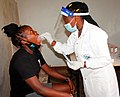 COVID-19 swab testing in Rwanda (2021) (from History of medicine)
 Most countries have seen a tremendous increase in life expectancy since 1945. However, in southern Africa, the HIV epidemic beginning around 1990 has eroded national health. (from History of medicine)
 National Hospital for Neurology and Neurosurgery in London, United Kingdom is a specialist neurological hospital. (from Health care)
 Sketch of Muslim physician Abu Bakr al-Razi (from History of medicine)
 Emil Kraepelin (1856–1926), the founder of modern scientific psychiatry, psychopharmacology and psychiatric genetics (from History of medicine)
 The numbers of Americans lacking health insurance and the uninsured rate from 1987 to 2008 (from Health insurance)
 Mexico City epidemic of 1737, with elites calling on the Virgin of Guadalupe (from History of medicine)
 Magical stela or cippus of Horus inscribed with healing encantations (c. 332 to 280 BCE) (from History of medicine)
 A cochlear implant is a common kind of neural prosthesis, a device replacing part of the human nervous system. (from History of medicine)
 A 12th-century manuscript of the Hippocratic Oath in Greek, one of the most famous aspects of classical medicine that carried into later eras (from History of medicine)
 "More Doctors Smoke Camels than Any Other Cigarette" advertisement for Camel cigarettes in the 1940s (from Medical ethics)
 Sometimes traditional medicines include parts of endangered species, such as the slow loris in Southeast Asia. (from Traditional medicine)
 A cuneiform terracotta tablet describing a medicinal recipe for poisoning (c. 18th century BCE). Discovered in Nippur, Iraq.
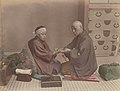 A doctor checks a patient's pulse in Meiji-era Japan. (from History of medicine)
 The Quaker-run York Retreat, founded in 1796, gained international prominence as a centre for moral treatment and a model of asylum reform following the publication of Samuel Tuke's Description of the Retreat (1813). (from History of medicine)
 Global concentrations of health care resources, as depicted by the number of physicians per 10,000 individuals, by country. Data is sourced from a WHO indicator and is from 2017-2023. (from Health care)
 The Edwin Smith Papyrus, written in the 17th century BCE, contains the earliest recorded reference to the brain. (from History of medicine)
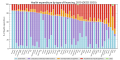 Health expenditure funding types (from Health insurance)
 Patient, Surrey County Lunatic Asylum, c. 1850–58. The asylum population in England and Wales rose from 1,027 in 1827 to 74,004 in 1900. (from History of medicine)
 Medicine during the First World War - medical transport (from History of medicine)
 Zhang Zhongjing – a Chinese pharmacologist, physician, inventor of the Eastern Han dynasty (from History of medicine)
 Neo-Assyrian cuneiform tablet fragment describing medical text, c. 9th to 7th century BCE (from History of medicine)
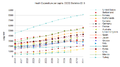 Health Expenditure per capita (in PPP-adjusted US$) among several OECD member nations. Data source: OECD's iLibrary (from Health insurance)
 A Ukrainian monument to the HIV pandemic (from History of medicine)
 Galen (129–216 CE), known for his wide insights into anatomy (from History of medicine)
 Depiction of smallpox in Franciscan Bernardino de Sahagún's history of the conquest of Mexico, Book XII of the Florentine Codex, from the defeated Aztecs' point of view (from History of medicine)
 Botánicas such as this one in Jamaica Plain, Boston, cater to the Latino community and sell folk medicine alongside statues of saints, candles decorated with prayers, lucky bamboo, and other items. (from Traditional medicine)
 healthcare expenditure in Japan by age group (from Health insurance)
 Guy's Hospital in 1820 (from History of medicine)
 Primary care may be provided in community health centers. (from Health care)
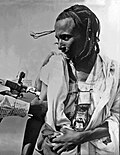 Smallpox vaccination in Niger, 1969. A decade later, this was the first infectious disease to be eradicated. (from History of medicine)
 Life Expectancy of the total population at birth among several OECD member nations. Data source: OECD's iLibrary (from Health insurance)
 Mandrake (written 'ΜΑΝΔΡΑΓΟΡΑ' in Greek capitals). Naples Dioscurides, 7th century (from History of medicine)
 The plinthios brochos as described by Greek physician Heraklas, a sling for binding a fractured jaw. These writings were preserved in one of Oribasius' collections. (from History of medicine)
 Hippocrates (c. 460–370 BCE). Known as the "father of medicine". (from History of medicine)
 The emergency room is often a frontline venue for the delivery of primary medical care. (from Health care)
 Jackson Memorial Hospital in Miami, the primary teaching hospital of the University of Miami's Miller School of Medicine and the largest hospital in the United States with 1,547 beds (from Health care)
 18th-century medical remedies collected by a British Gentry family (from History of medicine)
 Statue of Robert Koch, father of medical bacteriology, at Robert-Koch-Platz (Robert Koch square) in Berlin (from History of medicine)
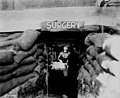 American combat surgery during the Pacific War, 1943 (from History of medicine)
 Infographic showing how healthcare data flows within the billing process (from Medical billing)
 Total healthcare cost per person. Public and private spending. US dollars PPP. For example: $6,319 for Canada in 2022. $12,555 for the US in 2022. (from Health care)
 Health spending by country. Percent of GDP (Gross domestic product). For example: 11.2% for Canada in 2022. 16.6% for the United States in 2022. (from Health care)


.JPG)


.jpg)


_per_person._OECD_countries_and_more.png)
.png)
More Did you know (auto generated)

- ... that Frederick Warren Freer switched from studying medicine to art after becoming partially deaf?
- ... that film director Orlando Bagwell initially thought that he would enter a career in medicine?
- ... that Plotkin's Vaccines was written by the inventor of the rubella vaccine because he felt that vaccinology had become a distinct field of medicine?
- ... that dentist and dental medicine professor B. Merrill Hopkinson was also a singer who performed with the orchestra of the Metropolitan Opera?
- ... that Mary Robertson was the first woman to receive a Doctor of Science degree in medicine from the University of Cape Town?
- ... that medicine dean Sjahriar Rasad was accused of being involved in a conspiracy to assassinate Indonesian president Sukarno?
Topics
Categories

Recognized content


.jpg)


.jpg)
,_M.D._1882,_portrait_photograph_by_H.D._Carns_&_Co;_Image_ID_27593990.jpg)


_(5493947511)_-_Restoration.jpg)


_-_Google_Art_Project.jpg)


.gif)


Associated Wikimedia
The following Wikimedia Foundation sister projects provide more on this subject:
-
 Commons
Free media repository -
 Wikidata
Free knowledge base -
 Wikiquote
Collection of quotations -
 Wikisource
Free-content library -
 Wikiversity
Free learning tools -
 Wiktionary
Dictionary and thesaurus


