Portal:Physics
Wikipedia portal for content related to Physics
From Wikipedia, the free encyclopedia

The Physics Portal


Physics is the scientific study of matter, its fundamental constituents, its motion and behavior through space and time, and the related entities of energy and force. It is one of the most fundamental scientific disciplines. A scientist who specializes in the field of physics is called a physicist.
Physics is one of the oldest academic disciplines. Over much of the past two millennia, physics, chemistry, biology, and certain branches of mathematics were part of natural philosophy, but during the Scientific Revolution in the 17th century, these natural sciences branched into separate research endeavors. Physics intersects with many interdisciplinary areas of research, such as biophysics and quantum chemistry, and the boundaries of physics are not rigidly defined. New ideas in physics often explain the fundamental mechanisms studied by other sciences and suggest new avenues of research in these and other academic disciplines, such as mathematics and philosophy.
Advances in physics often enable new technologies. For example, advances in the understanding of electromagnetism, solid-state physics, and nuclear physics led directly to the development of technologies that have transformed modern society, such as television, computers, domestic appliances, and nuclear weapons; advances in thermodynamics led to the development of industrialization; and advances in mechanics inspired the development of calculus. (Full article...)
 Featured article -


ZETA, short for Zero Energy Thermonuclear Assembly, was a major experiment in the early history of fusion power research. Based on the pinch plasma confinement technique, and built at the Atomic Energy Research Establishment in the United Kingdom, ZETA was larger and more powerful than any fusion machine in the world at that time. Its goal was to produce large numbers of fusion reactions, although it was not large enough to produce net energy.
ZETA went into operation in August 1957 and by the end of the month it was giving off bursts of about a million neutrons per pulse. Measurements suggested the fuel was reaching between 1 and 5 million kelvins, a temperature that would produce nuclear fusion reactions, explaining the quantities of neutrons being seen. Early results were leaked to the press in September 1957, and the following January an extensive review was released. Front-page articles in newspapers around the world announced it as a breakthrough towards unlimited energy, a scientific advance for Britain greater than the recently launched Sputnik had been for the Soviet Union. (Full article...)
Did you know -

- ... that Virendra Singh delivered the inaugural Homi Bhabha exchange lecture of the Institute of Physics and Indian Physics Association in 2000?
- ... that Leiden Law School is housed in the former laboratory of Heike Kamerlingh Onnes, a physicist and Nobel laureate?
Selected image -

Related portals


 Good articles -


Experiments on European robins, which are migratory, suggest their magnetic sense makes use of the quantum radical pair mechanism.
Magnetoreception is a sense which allows an organism to detect the Earth's magnetic field. Animals with this sense include some arthropods, molluscs, and vertebrates (fish, amphibians, reptiles, birds, and mammals). The sense is mainly used for orientation and navigation, but it may help some animals to form regional maps. Experiments on migratory birds provide evidence that they make use of a cryptochrome protein in the eye, relying on the quantum radical pair mechanism to perceive magnetic fields. This effect is extremely sensitive to weak magnetic fields, and readily disturbed by radio-frequency interference, unlike a conventional iron compass. Some bacteria orient passively using magnetite crystals; the mechanism has not been reliably detected in eukaryotes.
Cartilaginous fish including sharks and stingrays can detect small variations in electric potential with their electroreceptive organs, the ampullae of Lorenzini. These appear to be able to detect magnetic fields by induction. There is some evidence that these fish use magnetic fields in navigation. (Full article...)
Albert Einstein (14 March 1879 – 18 April 1955) was a German-born theoretical physicist best known for developing the known theory of relativity. Einstein also made important contributions to quantum theory. His mass–energy equivalence formula E = mc2, which arises from special relativity, has been called "the world's most famous equation". He received the 1921 Nobel Prize in Physics for "his services to theoretical physics, and especially for his discovery of the law of the photoelectric effect".
Born as a subject to the Kingdom of Württemberg, part of the German Empire, Einstein moved to Switzerland in 1895, forsaking his citizenship the following year. In 1897, at the age of seventeen, he enrolled in the mathematics and physics teaching diploma program at the Swiss federal polytechnic school in Zurich, graduating in 1900. He acquired Swiss citizenship a year later, which he kept for the rest of his life, and afterwards secured a permanent position at the Swiss Patent Office in Bern. In 1905, he submitted a successful PhD dissertation to the University of Zurich. In 1914, he moved to Berlin to join the Prussian Academy of Sciences and the Humboldt University of Berlin, becoming director of the Kaiser Wilhelm Institute for Physics in 1917; he also became a Prussian and consequently also German citizen again. In 1933, while Einstein was visiting the United States, Adolf Hitler came to power in Germany. Horrified by the Nazi persecution of his fellow Jews, he decided to remain in the US, and was granted American citizenship in 1940. On the eve of World War II, he endorsed a letter to President Franklin D. Roosevelt alerting him to the potential German nuclear weapons program and recommending that the US begin similar research, later carried out as the Manhattan Project. (Full article...)
John von Neumann (/vɒn ˈnɔɪmən/ von NOY-mən; Hungarian: Neumann János Lajos [ˈnɒjmɒn ˈjaːnoʃ ˈlɒjoʃ]; December 28, 1903 – February 8, 1957) was a Hungarian and American mathematician, physicist, computer scientist and engineer. Von Neumann had perhaps the widest coverage of any mathematician of his time, integrating pure and applied sciences and making major contributions to many fields, including mathematics, physics, economics, computing, and statistics. He was a pioneer in building the mathematical framework of quantum physics, in the development of functional analysis, and in game theory, introducing or codifying concepts including cellular automata, the universal constructor and the digital computer. His analysis of the structure of self-replication preceded the discovery of the structure of DNA.
During World War II, von Neumann worked on the Manhattan Project. He developed the mathematical models behind the explosive lenses used in the implosion-type nuclear weapon. Before and after the war, he consulted for many organizations including the Office of Scientific Research and Development, the United States Army's Ballistic Research Laboratory, the Armed Forces Special Weapons Project and the Oak Ridge National Laboratory. At the peak of his influence in the 1950s, he chaired a number of Defense Department committees including the Strategic Missile Evaluation Committee and the ICBM Scientific Advisory Committee. He was also a member of the influential Atomic Energy Commission in charge of all atomic energy development in the country. He played a key role alongside Bernard Schriever and Trevor Gardner in the design and development of the United States' first intercontinental ballistic missile (ICBM) programs. At that time he was considered the nation's foremost expert on nuclear weaponry and the leading defense scientist at the U.S. Department of Defense. (Full article...)
Sir John Douglas Cockcroft (27 May 1897 – 18 September 1967) was a British experimental physicist who shared the 1951 Nobel Prize in Physics with Ernest Walton for their splitting of the atomic nucleus, which led to the development of nuclear power and weapons.
After service on the Western Front with the Royal Field Artillery during the Great War, Cockcroft studied electrical engineering at Manchester Municipal College of Technology whilst he was an apprentice at Metropolitan Vickers Trafford Park and was also a member of their research staff. He then won a scholarship to St John's College, Cambridge, where he sat the Tripos exam in June 1924, becoming a Wrangler. Ernest Rutherford accepted Cockcroft as a research student in the Cavendish Laboratory, and Cockcroft completed his doctorate under Rutherford's supervision in 1928. With Walton and Mark Oliphant, he built what became known as a Cockcroft–Walton generator. Cockcroft and Walton used this to perform the first artificial disintegration of an atomic nucleus, a feat popularly known as "splitting the atom." (Full article...)
Nikola Tesla (10 July 1856 – 7 January 1943) was a Serbian-American engineer, futurist, and inventor. He is known for his contributions to the design of the modern alternating current (AC) electricity supply system.
Born and raised in the Austro-Hungarian Empire, Tesla first studied engineering and physics in the 1870s without receiving a degree. He then gained practical experience in the early 1880s working in telephony and at Continental Edison in the new electric power industry. In 1884, he migrated to the United States, where he became a naturalized citizen. He worked for a short time at the Edison Machine Works in New York City before he struck out on his own. With the help of partners to finance and market his ideas, Tesla set up laboratories and companies in New York to develop a range of electrical and mechanical devices. His AC induction motor and related polyphase AC patents, licensed by Westinghouse Electric in 1888, earned him a considerable amount of money and became the cornerstone of the polyphase system, which Westinghouse marketed. (Full article...)- Electrical elastance is the reciprocal of capacitance. The SI unit of elastance is the inverse farad (F−1). The concept is not widely used by electrical and electronic engineers, as the value of capacitors is typically specified in units of capacitance rather than inverse capacitance. However, elastance is used in theoretical work in network analysis and has some niche applications, particularly at microwave frequencies.
The term elastance was coined by Oliver Heaviside through the analogy of a capacitor to a spring. The term is also used for analogous quantities in other energy domains. In the mechanical domain, it corresponds to stiffness, and it is the inverse of compliance in the fluid flow domain, especially in physiology. It is also the name of the generalized quantity in bond-graph analysis and other schemes that analyze systems across multiple domains. (Full article...)
Alvin Martin Weinberg (/ˈwaɪnbɜːrɡ/; April 20, 1915 – October 18, 2006) was an American nuclear physicist who was the administrator of Oak Ridge National Laboratory (ORNL) during and after the Manhattan Project. He came to Oak Ridge, Tennessee, in 1945 and remained there until his death in 2006. He was the first to use the term "Faustian bargain" to describe nuclear energy.
A graduate of the University of Chicago, which awarded him his doctorate in mathematical biophysics in 1939, Weinberg joined the Manhattan Project's Metallurgical Laboratory in September 1941. The following year he became part of Eugene Wigner's Theoretical Group, whose task was to design the nuclear reactors that would convert uranium into plutonium. (Full article...)- Condensed matter physics is the field of physics that deals with the macroscopic and microscopic physical properties of matter, especially the solid and liquid phases, that arise from electromagnetic forces between atoms and electrons. More generally, the subject deals with condensed phases of matter: systems of many constituents with strong interactions among them. More exotic condensed phases include the superconducting phase exhibited by certain materials at extremely low cryogenic temperatures, the ferromagnetic and antiferromagnetic phases of spins on crystal lattices of atoms, the Bose–Einstein condensates found in ultracold atomic systems, and liquid crystals. Condensed matter physicists seek to understand the behavior of these phases by experiments to measure various material properties, and by applying the physical laws of quantum mechanics, electromagnetism, statistical mechanics, and other physics theories to develop mathematical models and predict the properties of extremely large groups of atoms.
The diversity of systems and phenomena available for study makes condensed matter physics the most active field of contemporary physics: as of 2009 one third of all American physicists self-identify as condensed matter physicists, and the Division of Condensed Matter Physics is the largest division of the American Physical Society. These include solid state and soft matter physicists, who study quantum and non-quantum physical properties of matter respectively. Both types study a great range of materials, providing many research, funding and employment opportunities. The field overlaps with chemistry, materials science, engineering and nanotechnology, and relates closely to atomic physics and biophysics. The theoretical physics of condensed matter shares important concepts and methods with that of particle physics and nuclear physics. (Full article...) - In particle physics, quantum electrodynamics (QED) is the relativistic quantum field theory of electrodynamics. In essence, it describes how light and matter interact and is the first theory where full agreement between quantum mechanics and special relativity is achieved. QED mathematically describes all phenomena involving electrically charged particles interacting by means of exchange of photons and represents the quantum counterpart of classical electromagnetism giving a complete account of matter and light interaction.
In technical terms, QED can be described as a perturbation theory of the electromagnetic quantum vacuum. Richard Feynman called it "the jewel of physics" for its extremely accurate predictions of quantities like the anomalous magnetic moment of the electron and the Lamb shift of the energy levels of hydrogen. It is the most precise and stringently tested theory in physics. (Full article...) 
Facsimile of the Einstein–Szilard letter
The Einstein–Szilard letter was a letter written by Leo Szilard and signed by Albert Einstein on August 2, 1939, that was sent to President of the United States Franklin D. Roosevelt. Written by Szilard in consultation with fellow Hungarian physicists Edward Teller and Eugene Wigner, the letter warned that Germany might develop atomic bombs and suggested that the United States start its own nuclear program. It prompted action by Roosevelt, which eventually resulted in the Manhattan Project, the development of the first atomic bombs, and the use of these bombs on the cities of Hiroshima and Nagasaki. (Full article...)
Fluorescent lamp, a device with negative differential resistance. In operation, an increase in current through the fluorescent tube causes a drop in voltage across it. If the tube were connected directly to the power line, the falling tube voltage would cause more and more current to flow, causing it to arc flash and destroy itself. To prevent this, fluorescent tubes are connected to the power line through a ballast. The ballast adds positive impedance (AC resistance) to the circuit to counteract the negative resistance of the tube, limiting the current.
In electronics, negative resistance (NR) is a property of some electrical circuits and devices in which an increase in voltage across the device's terminals results in a decrease in electric current through it.
This is in contrast to an ordinary resistor, in which an increase in applied voltage causes a proportional increase in current in accordance with Ohm's law, resulting in a positive resistance. Under certain conditions, negative resistance can increase the power of an electrical signal, amplifying it. (Full article...)
Figure 1: Selected area diffraction pattern of a twinned austenite crystal in a piece of steel
Electron diffraction is a generic term for phenomena associated with changes in the direction of electron beams due to elastic interactions with atoms. It occurs due to elastic scattering, when there is no change in the energy of the electrons. The negatively charged electrons are scattered due to Coulomb forces when they interact with both the positively charged atomic core and the negatively charged electrons around the atoms. The resulting map of the directions of the electrons far from the sample is called a diffraction pattern, see for instance Figure 1. Beyond patterns showing the directions of electrons, electron diffraction also plays a major role in the contrast of images in electron microscopes.
This article provides an overview of electron diffraction and electron diffraction patterns, collectively referred to by the generic name electron diffraction. This includes aspects of how in a general way electrons can act as waves, and diffract and interact with matter. It also involves the extensive history behind modern electron diffraction, how the combination of developments in the 19th century in understanding and controlling electrons in vacuum and the early 20th century developments with electron waves were combined with early instruments, giving birth to electron microscopy and diffraction in 1920–1935. While this was the birth, there have been a large number of further developments since then. (Full article...)
Hendrik Antoon Lorentz (right) after whom the Lorentz group is named and Albert Einstein whose special theory of relativity is the main source of application. Photo taken by Paul Ehrenfest 1921.
The Lorentz group is a Lie group of symmetries of the spacetime of special relativity. This group can be realized as a collection of matrices, linear transformations, or unitary operators on some Hilbert space; it has a variety of representations. This group is significant because special relativity together with quantum mechanics are the two physical theories that are most thoroughly established, and the conjunction of these two theories is the study of the infinite-dimensional unitary representations of the Lorentz group. These have both historical importance in mainstream physics, as well as connections to more speculative present-day theories.
The development of the representation theory has historically followed the development of the more general theory of representation theory of semisimple groups, largely due to Élie Cartan and Hermann Weyl, but the Lorentz group has also received special attention due to its importance in physics. Notable contributors are physicist E. P. Wigner and mathematician Valentine Bargmann with their Bargmann–Wigner program, one conclusion of which is, roughly, a classification of all unitary representations of the inhomogeneous Lorentz group amounts to a classification of all possible relativistic wave equations. The classification of the irreducible infinite-dimensional representations of the Lorentz group was established by Paul Dirac's doctoral student in theoretical physics, Harish-Chandra, later turned mathematician, in 1947. Closely related work was published independently by Bargmann and Israel Gelfand together with Mark Naimark in the same year. (Full article...)
A kilogram mass and three metric measuring devices: a tape measure in centimetres, a thermometer in degrees Celsius, and a multimeter that measures potential in volts, current in amperes and resistance in ohms.
The metric system is a system of measurement that standardises a set of base units and a nomenclature for describing relatively large and small quantities using decimal-based multiplicative unit prefixes. Though the rules governing the metric system have changed over time, the modern definition, the International System of Units (SI), defines the metric prefixes and seven base units: metre (m), kilogram (kg), second (s), ampere (A), kelvin (K), mole (mol), and candela (cd).
An SI derived unit is a named combination of base units, such as the hertz (cycles per second), newton (kg⋅m/s2), and tesla (1 kg⋅s−2⋅A−1). In the case of degrees Celsius, it is a shifted scale derived from the kelvin. Certain units have been officially accepted for use with the SI. Some of these are decimalised, like the litre and electronvolt, and are considered "metric". Others, like the astronomical unit are not. Ancient non-metric but SI-accepted multiples of time, minute and hour, are base 60 (sexagesimal). Similarly, the angular measure degree and submultiples,
arcminute, and arcsecond, are also sexagesimal and SI-accepted. (Full article...)- A gravity bong, also known as a GB, bucket bong, grav, geeb, gibby, yoin, or ghetto bong, is a method of consuming smokable substances such as cannabis. The term describes both a bucket bong and a waterfall bong, since both use air pressure and water to draw smoke. A lung uses similar equipment but instead of water draws the smoke by removing a compacted plastic bag or similar from the chamber.
The bucket bong is made out of two containers, with the larger, open-top container filled with water. The smaller has an attached bowl and open bottom, and the smaller is placed into the larger. Once the bowl is lit, the operator must move the small container up, causing a pressure difference. Smoke slowly fills the small jar until the user removes the bowl and inhales the contents. A waterfall bong is made up of only one container. The container must have a bowl and a small hole near the base so the water can drain easily. As the water flows out of the container, air is forced through the bowl and causes the substance to burn and accumulate smoke in the bong. However, none of them in their usual construction does actually fit the definition of a bong, as the smoke is not made to bubble through the water in order to cool and filter it. (Full article...)


June anniversaries

- 1 June 1831 – James Clark Ross discovers the North Magnetic Pole.
- 1 June 1869 – Thomas Edison receives a patent for his electric voting machine.
- 1 June 1910 – Robert Falcon Scott expedition leaves England for South Pole.
- 1 June 1978 – First Patent Cooperation Treaty international filings.
- 1 June 1980 – Cable News Network (CNN) begins broadcasting.
- 1 June 1990 – Bush and Gorbachev sign chemical weapons ban.
- 1 June 2000 – Patent Law Treaty is signed.
- 2 June 1966 – Surveyor 1 lands on the Moon.
- 2 June 2003 - ESA launches Mars Express probe to Mars.
- 3 June 1965 - First American spacewalk, mission Gemini IV
- 3 June 1973 – A Soviet supersonic Tupolev Tu-144 crashes.
- 4 June 781 BC – First historic solar eclipse is recorded in China.
- 4 June 1973 – A patent for the ATM is granted.
- 4 June 1996 - First flight. Ariane 5 rocket explodes after roughly 20 seconds.
- 5 June 1977 – Apple II, personal computer goes on sale.
Birthdays
- 1 June 1633 – Geminiano Montanari, Italian astronomer (d. 1687)
- 1 June 1796 – Nicolas Léonard Sadi Carnot, French physicist (d. 1832)
- 1 June 1899 – Edward Charles Titchmarsh, English mathematician (d. 1963)
- 1 June 1907 – Frank Whittle, invented jet engine. (d. 1996)
- 1 June 1917 – William S. Knowles Nobel Prize laureate
- 1 June 1940 – Kip Thorne, American physicist
- 2 June 1930 – Pete Conrad, American astronaut (d. 1999)
- 2 June 1949 – Heather Couper, British astronomer
- 3 June 1659 – David Gregory, Scottish astronomer (d. 1708)
- 3 June 1923 – Igor Shafarevich, Russian mathematician
- 4 June 1704 – Benjamin Huntsman, English inventor and manufacturer (d. 1776)
- 4 June 1877 – Heinrich Wieland, German biochemist & Nobel laureate (d. 1957)
- 4 June 1916 – Robert F. Furchgott, American chemist & Nobel laureate (d. 2009)
- 4 June 1967 – Robert Shane Kimbrough, American astronaut
- 5 June 1760 – Johan Gadolin, Finnish scientist (d. 1852)
- 5 June 1819 – John Couch Adams, English astronomer (d. 1892)
- 5 June 1862 – Allvar Gullstrand, Swedish ophthalmologist Nobel laureate (d. 1930)
- 5 June 1900 – Dennis Gabor, Hungarian physicist, Nobel laureate (d. 1979)
- 5 June 1965 – Michael E. Brown, American astronomer
- 13 June 1831 - James Clerk Maxwell, Scottish physicist (d. 1879)
General images
 Chien-Shiung Wu worked on parity violation in 1956 and announced her results in January 1957. (from History of physics)
 James Prescott Joule's apparatus for measuring the mechanical equivalent of heat which the "work" of the falling weight is converted into the "heat" of agitation in the water. (from History of physics)
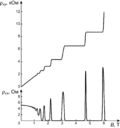 The quantum Hall effect: Components of the Hall resistivity as a function of the external magnetic field (from Condensed matter physics)
 Richard Feynman's Los Alamos ID badge (from History of physics)
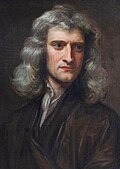 Sir Isaac Newton (1642–1727) (from History of physics)
 A Feynman diagram representing (left to right) the production of a photon (blue sine wave) from the annihilation of an electron and its complementary antiparticle, the positron. The photon becomes a quark–antiquark pair and a gluon (green spiral) is released. (from History of physics)
 Heike Kamerlingh Onnes and Johannes van der Waals with the helium liquefactor at Leiden in 1908 (from Condensed matter physics)
 One possible signature of a Higgs boson from a simulated proton–proton collision. It decays almost immediately into two jets of hadrons and two electrons, visible as lines. (from History of physics)
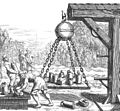 Magdeburg hemispheres, an experiment by Otto von Guericke where two metal hemispheres are held together by vacuum and cannot be separated even if large forces are applied. (from History of physics)
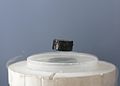 A magnet levitating above a high-temperature superconductor. Today some physicists are working to understand high-temperature superconductivity using the AdS/CFT correspondence. (from Condensed matter physics)
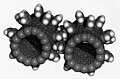 Computer simulation of nanogears made of fullerene molecules. It is hoped that advances in nanoscience will lead to machines working on the molecular scale. (from Condensed matter physics)
 Classical physics (Rayleigh–Jeans law, black line) failed to explain black-body radiation – the so-called ultraviolet catastrophe. The quantum description (Planck's law, colored lines) is said to be modern physics. (from Modern physics)
 An engraving of Benjamin Franklin's kite experiment used to study lightning. (from History of physics)
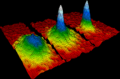 The first Bose–Einstein condensate observed in a gas of ultracold rubidium atoms. The blue and white areas represent higher density. (from Condensed matter physics)
 Christiaan Huygens (1629–1695) (from History of physics)
 Maxwell's demon, thought experiment by James Clerk Maxwell to describe the kinetic theory of gases and describe how a microscopic creature could lead to violations of the second law of thermodynamics. (from History of physics)
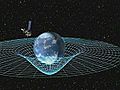 Einstein proposed that gravitation results from masses (or their equivalent energies) curving ("bending") the spacetime in which they exist, altering the paths they follow within it. (from History of physics)
 Star maps by the 11th century Chinese polymath Su Song are the oldest known woodblock-printed star maps to have survived to the present day. This example, dated 1092, employs the cylindricalequirectangular projection. (from History of physics)
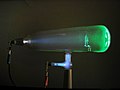 Crookes tube used to study cathode rays. It led to the discovery of the electron by J. J. Thomson. (from History of physics)
 The Standard Model (from History of physics)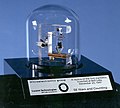
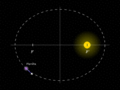 Johannes Kepler's first law of planetary motion states that planets move in elliptical orbits about the Sun. (from History of physics)
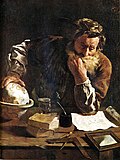 The ancient Greek mathematician Archimedes, developer of ideas regarding fluid mechanics and buoyancy. (from History of physics)
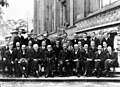 1927 Solvay Conference included prominent physicists Albert Einstein, Werner Heisenberg, Max Planck, Hendrik Lorentz, Niels Bohr, Marie Curie, Erwin Schrödinger, Paul Dirac (from History of physics)
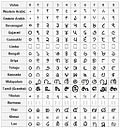 The Hindu-Arabic numeral system. The inscriptions on the edicts of Ashoka (3rd century BCE) display this number system being used by the Imperial Mauryas. (from History of physics)
 Image of X-ray diffraction pattern from a protein crystal (from Condensed matter physics)
 Hydrogen emission spectrum is discrete (here in log scale). The lines can only be explained with quantum mechanics. (from History of physics)
 Albert Einstein (1879–1955), ca. 1905 (from History of physics)
 Newton's cannonball, a though experiment by Newton relating the motion of a projectile and orbiting of planets. (from History of physics)
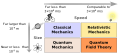 Classical physics is usually concerned with everyday conditions: speeds are much lower than the speed of light, sizes are much greater than that of atoms, yet very small in astronomical terms. Modern physics, however, is concerned with high velocities, small distances, and very large energies. (from Modern physics)
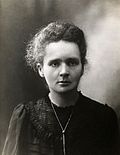 Marie Skłodowska-Curie
(1867–1934) received Nobel prizes in physics (1903) and chemistry (1911). (from History of physics)
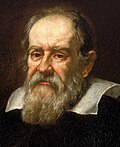 Galileo Galilei (1564–1642), early proponent of the modern scientific worldview and method (from History of physics)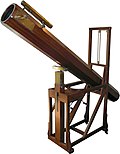
 Composite montage comparing Jupiter (left) and its four Galilean moons (from top: Io, Europa, Ganymede, Callisto) (from History of physics)
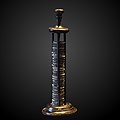 The Voltaic pile, the first battery was invented by Alessandro Volta in 1800 (from History of physics)
_in_1958.jpg)
.png)


.png)


.png)

Categories

Fundamentals: Concepts in physics | Constants | Physical quantities | Units of measure | Mass | Length | Time | Space | Energy | Matter | Force | Gravity | Electricity | Magnetism | Waves
Basic physics: Mechanics | Electromagnetism | Statistical mechanics | Thermodynamics | Quantum mechanics | Theory of relativity | Optics | Acoustics
Specific fields: Acoustics | Astrophysics | Atomic physics | Molecular physics | Optical physics | Computational physics | Condensed matter physics | Nuclear physics | Particle physics | Plasma physics
Tools: Detectors | Interferometry | Measurement | Radiometry | Spectroscopy | Transducers
Background: Physicists | History of physics | Philosophy of physics | Physics education | Physics journals | Physics organizations
Other: Fiction about physics | Physics lists | Physics software | Physics stubs
Physics topics
Classical physics traditionally includes the fields of mechanics, optics, electricity, magnetism, acoustics and thermodynamics. The term Modern physics is normally used for fields which rely heavily on quantum theory, including quantum mechanics, atomic physics, nuclear physics, particle physics and condensed matter physics. General and special relativity are usually considered to be part of modern physics as well.
More recognized content

Associated Wikimedia
The following Wikimedia Foundation sister projects provide more on this subject:
-
 Commons
Free media repository -
 Wikidata
Free knowledge base -
 Wikiquote
Collection of quotations -
 Wikisource
Free-content library -
 Wikiversity
Free learning tools -
 Wikivoyage
Free travel guide -
 Wiktionary
Dictionary and thesaurus


