2013 in New Zealand
From Wikipedia, the free encyclopedia
| |||||
| Decades: | |||||
|---|---|---|---|---|---|
| See also: | |||||

The following events happened in New Zealand in the year 2013.
- National
Estimated populations as at 30 June.[1]
- New Zealand total – 4,442,100
- North Island – 3,398,700
- South Island – 1,042,800
- Main urban areas
Estimated populations as at 30 June.[1]
- Auckland – 1,381,800
- Christchurch – 369,200
- Dunedin – 115,100
- Gisborne – 35,200
- Hamilton – 214,800
- Invercargill – 49,300
- Kapiti – 40,700
- Napier-Hastings – 127,600
- Nelson – 63,300
- New Plymouth – 54,800
- Palmerston North – 81,500
- Rotorua – 55,800
- Tauranga – 125,700
- Wellington – 389,600
- Whanganui – 39,300
- Whangārei – 53,600
Incumbents
Regal and vice-regal
 Elizabeth II
 Jerry Mateparae
.jpg)

Government
2013 is the second full year of the 50th Parliament, which first sat on 20 December 2011 and will dissolve on 17 December 2014 if not dissolved prior. The Fifth National Government, first elected in 2008, continues.
- Speaker of the House – Lockwood Smith to 31 January, then David Carter
- Prime Minister – John Key
- Deputy Prime Minister – Bill English
- Leader of the House – Gerry Brownlee
- Minister of Finance – Bill English
- Minister of Foreign Affairs – Murray McCully
 Lockwood Smith
 David Carter
 John Key
 Bill English
 Gerry Brownlee
 Murray McCully
.jpg)

.jpg)
.jpg)

.jpg)
Other Party leaders
- Labour – David Shearer to 15 September then David Cunliffe
- Green – Russel Norman and Metiria Turei
- New Zealand First – Winston Peters
- Māori Party – Pita Sharples to 13 July then Te Ururoa Flavell, and Tariana Turia
 David Shearer
 David Cunliffe
 Russel Norman
 Metiria Turei
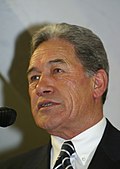 Winston Peters
 Pita Sharples
 Te Ururoa Flavell


Judiciary
- Chief Justice – Sian Elias
- President of the Court of Appeal – Mark O'Regan
- Chief High Court judge – Helen Winkelmann
- Chief District Court judge – Jan-Marie Doogue
 Sian Elias
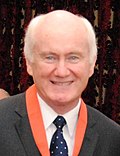 Mark O'Regan
 Helen Winkelmann

.jpg)
.jpg)
Main centre leaders
Local elections for all city and district councils are held on 12 October.
- Mayor of Auckland – Len Brown
- Mayor of Tauranga – Stuart Crosby
- Mayor of Hamilton – Julie Hardaker
- Mayor of Wellington – Celia Wade-Brown
- Mayor of Christchurch – Bob Parker to 12 October, then Lianne Dalziel
- Mayor of Dunedin – Dave Cull
 Len Brown
 Stuart Crosby
 Julie Hardaker
 Celia Wade-Brown
 Bob Parker
 Lianne Dalziell
 Dave Cull


.jpg)


Arts and literature
Performing arts
Benny Award presented by the Variety Artists Club of New Zealand to Larry Morris.
Events
January
February
- 1 February – Callaghan Innovation, a new Crown entity, is launched to replace Industrial Research Limited and parts of the Ministry of Business, Innovation and Employment.[3]
March
- 5 March – The 2013 New Zealand census of Population and Dwellings is held, a replacement for the 2011 census that was cancelled after the February 2011 Christchurch earthquake.[4]
- 20 March – Popular breakfast spread Marmite returns to supermarket shelves, albeit still in limited supply, ending "Marmageddon". The sole production line had stopped in November 2011 due to earthquake damage at the Christchurch factory, which resulted in stocks running out in March 2012.
April
- Police celebrate the second-equal lowest Easter road toll on record – three – second only to 2012's zero.[5]
- The Akaroa Marine Reserve is approved by the Minister of Conservation Nick Smith, 17 years after it was initially proposed.
- 17 April – The Marriage (Definition of Marriage) Amendment Bill passes its third reading, with New Zealand becoming the thirteenth country worldwide to pass laws legalising same-sex marriage.[6]
- 20 April – The 2013 New Zealand gallantry awards are announced.[7]
- 28 April – The South Island completes digital television transition when analogue television signals are switched off at 2:00 am.[8]
May
- 20 May – A morning peak commuter train derails on the approach to Wellington railway station, puncturing a hole in a carriage's floor in the process. Four people are injured and thousands of commuters are stranded as the line into the city is blocked.[9]
June
- 20–21 June – Wellington is hit by a storm, described to be the worst since the 1968 Wahine storm, with winds reaching 200 km/h. Thousands of homes lose power and part of the Hutt Valley rail line is washed out, causing severe congestion on roads for a week while it is repaired.
- 29 June – Meka Whaitiri wins the Ikaroa-Rāwhiti by-election, replacing the late Parekura Horomia.
- 30 June – The last of Christchurch's Central City Red Zone cordon is removed.[10]
July
- 21 July – A series of earthquakes in Cook Strait, the largest of them 6.5 MW, affect Wellington and the upper South Island.
August
- 16 August – A 6.6 MW earthquake strikes under Lake Grassmere, Marlborough, affecting Wellington and the upper South Island.
- 19 August – The Marriage (Definition of Marriage) Amendment Bill comes into force, allowing same-sex couples to legally marry from this day.
- 22 August – David Shearer announces his resignation as leader of the Labour Party, fearing he no longer had the full confidence of his caucus.[11]
September
- 15 September – David Cunliffe is elected leader of the Labour Party.
- 29 September – The Lower North Island and East Cape complete digital television transition when analogue television signals are switched off at 3:00 am.[8]
October
- 7 October – After an appeal to the Privy Council, Mark Lundy's conviction for killing his wife and daughter in August 2000 is quashed and a retrial ordered.[12]
- 12 October – Elections held for all local councils, regional councils and district health boards.[13]
- 14 October – A state of emergency is declared in Manawatu-Wanganui due to flooding.[14]
November
- 15 November — Over $1.1 billion is allocated to the rebuilding and repairing of 115 severely earthquake damaged schools in greater Christchurch within ten years, which accounts for 80 per cent of classrooms in the region.[15][16]
- 30 November – Poto Williams wins the Christchurch East by-election, replacing Lianne Dalziel and retaining the seat for Labour.
December
- 1 December – The Upper North Island becomes the last region to complete digital television transition bringing to an end 53 years of analogue television broadcasts in New Zealand.[8]
- 11 December – New Zealand's population reaches 4,500,000, according to Statistics New Zealand estimates.[17]
Holidays and observances
- 6 February – Waitangi Day
- 25 April – Anzac Day
- 3 June – Queen's Birthday Monday
- 28 October – Labour Day
Sport
Awards
- Halberg Awards
- Supreme Award – Lydia Ko (golf)
- Sportsman – Scott Dixon (motorsport)
- Sportswoman – Lydia Ko (golf)
- Team – All Blacks (rugby)
Shooting
- Ballinger Belt – John Snowden (Ashburton)[18]
Births
- 6 February – Geronimo, alpaca
- 10 May – Taufaʻahau Manumataongo, son of Crown Prince Tupoutoʻa ʻUlukalala and Princess Sinaitakala Fakafanua of Tonga
- 2 October – Gingernuts, Thoroughbred racehorse
- 8 October – Bonneval, Thoroughbred racehorse
