2016 in New Zealand
From Wikipedia, the free encyclopedia
| |||||
| Decades: | |||||
|---|---|---|---|---|---|
| See also: | |||||

The following lists events that happened during 2016 in New Zealand.
- National
Estimated populations as at 30 June.[1]
- New Zealand total – 4,693,000
- North Island – 3,596,200
- South Island – 1,096,200
- Main urban areas
Estimated populations as at 30 June.[1]
- Auckland – 1,495,000
- Blenheim – 30,700
- Christchurch – 389,700
- Dunedin – 118,500
- Gisborne – 36,100
- Hamilton – 229,900
- Invercargill – 50,700
- Kapiti – 41,800
- Napier-Hastings – 131,000
- Nelson – 65,700
- New Plymouth – 56,800
- Palmerston North – 84,300
- Rotorua – 57,800
- Tauranga – 134,500
- Wellington – 405,000
- Whanganui – 39,600
- Whangārei – 56,400
Incumbents
Regal and vice-regal
- Head of State – Elizabeth II
- Governor-General – Jerry Mateparae[2] until 31 August, then Patsy Reddy from 28 September.
 Elizabeth II
 Jerry Mateparae
 Patsy Reddy


Government
2016 is the second full year of the 51st Parliament, which first sat on 21 October 2014.
The Fifth National Government, first elected in 2008, continues.
- Speaker of the House – David Carter
- Prime Minister – John Key (until 12 December), then Bill English
- Deputy Prime Minister – Bill English (until 12 December), then Paula Bennett
- Leader of the House – Gerry Brownlee
- Minister of Finance – Bill English, then (from 20 December) Steven Joyce
- Minister of Foreign Affairs – Murray McCully
 David Carter
 John Key
 Bill English
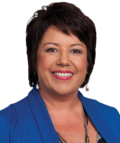 Paula Bennett
 Gerry Brownlee
 Steven Joyce
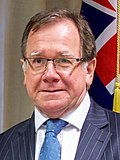 Murray McCully

.jpg)
.jpg)


.jpg)

Other party leaders in parliament
- Labour – Andrew Little
- Green – James Shaw and Metiria Turei
- New Zealand First – Winston Peters
- Māori Party – Te Ururoa Flavell and Marama Fox
- ACT New Zealand – David Seymour
- United Future – Peter Dunne
 Andrew Little
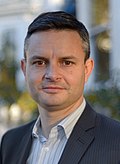 James Shaw
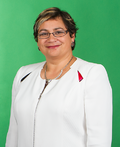 Metiria Turei
 Winston Peters
 Te Ururoa Flavell
 Marama Fox
 David Seymour
 Peter Dunne

.jpg)

.jpg)


.jpg)

Judiciary
- Chief Justice – Sian Elias
- President of the Court of Appeal – Ellen France, and then Stephen Kós from 22 July
- Chief High Court judge – Geoffrey Venning
- Chief District Court judge – Jan-Marie Doogue
 Sian Elias
 Ellen France
 Stephen Kós

.jpg)
.jpg)
Main centre leaders
- Mayor of Auckland – Len Brown, then from 1 November Phil Goff
- Mayor of Tauranga – Stuart Crosby, then from 31 October Greg Brownless
- Mayor of Hamilton – Julie Hardaker, then from 9 November Andrew King
- Mayor of Wellington – Celia Wade-Brown, then from 26 October Justin Lester
- Mayor of Christchurch – Lianne Dalziel
- Mayor of Dunedin – Dave Cull
 Len Brown
 Phil Goff
 Stuart Crosby
 Greg Brownless
 Julie Hardaker
 Andrew King
 Celia Wade-Brown
 Justin Lester
 Lianne Dalziell
 Dave Cull

.jpg)


.jpg)
.jpg)

.jpg)


Events
February
- 8 February – Operation Neptune begins.[3]
- 14 February – A significant aftershock in Christchurch causes some cliffs to collapse.[4]
March
- 3–24 March – Second referendum on changing the country's flag – existing flag retained.[5]
- 11 March – Parliament passes legislation to outlaw zero-hour contracts.[6]
April
- 18 April – The Canterbury Earthquake Recovery Authority is disestablished.[7]
June
- 6 June – The 2016 Queen's Birthday Honours are announced.[8]
August
- 5–21 August – 132 athletes from New Zealand compete at the 2016 Summer Olympics in Rio de Janeiro, Brazil.
September
- 2 September – A 7.1 magnitude earthquake strikes north-east of Te Araroa.[9]
October
- 8 October – The 2016 local elections are held.
November
- 14 November – A MW 7.8 earthquake strikes Kaikōura at midnight, killing two people.
- 22 November – Operation Neptune ends.
December
- 5 December – John Key announces that he will step down as prime minister and leader of the National Party on 12 December.
- 12 December – Bill English is sworn in as New Zealand's 39th prime minister, following the resignation of John Key.
- 15 December – Amazon Prime Video launches in New Zealand.[10]
- 31 December – The 2017 New Year Honours are announced.[11]
Arts and literature
Performing arts
- Benny Award presented by the Variety Artists Club of New Zealand to Suzanne Prentice.
Sport
Halberg Awards
- 54th Halberg Awards (awarded 9 February 2017 for the 2016 calendar year)
- Supreme Award – Lisa Carrington (canoeing)
- Sportsman of the Year – Mahé Drysdale (rowing)
- Sportswoman of the Year – Lisa Carrington (canoeing)
- Team of the Year – Men's 49er class: Peter Burling & Blair Tuke (sailing)
- Disabled Sportsperson of the Year – Liam Malone (athletics)
- Coach of the Year – Gordon Walker (canoeing)
- Emerging Talent – Campbell Stewart (cycling)
Olympics
- New Zealand sends a team of 199 competitors across 20 sports.
- Sprint canoeist Lisa Carrington becomes the first New Zealand women to win two medals in the same Olympic Games.
 Gold
Gold Silver
 Bronze
Total 4 9 5 18


Paralympics
- Swimmer Sophie Pascoe overtakes Eve Rimmer to become New Zealand's most successful Paralympian in terms of medals won.
- Gold Silver Bronze
Total 9 5 7 21
Rowing
- New Zealand Secondary School Championships (Maadi Cup)
- Maadi Cup (boys U18 eight) – Christ's College
- Levin 75th Jubilee Cup (girls U18 eight) – Diocesan School for Girls
- Star Trophy (overall points) – St Peter's School (Cambridge)
Shooting
- Ballinger Belt – Malcolm Dodson (Kaituna/Blenheim)[12]
Winter Youth Olympics
- New Zealand sends a team of 11 competitors in five sports.
- Gold Silver Bronze
Total 0 1 1 2