Portal:Devon
Wikipedia portal for content related to Devon
From Wikipedia, the free encyclopedia

The Devon Portal
.jpg)
Devon (/ˈdɛvən/ DEV-ən; historically also known as Devonshire /-ʃɪər, -ʃər/ -sheer, -shər) is a ceremonial county in South West England. It is bordered by the Bristol Channel to the north, Somerset and Dorset to the east, the English Channel to the south, and Cornwall to the west. The city of Plymouth is the largest settlement.
Devon has a varied geography. It contains Dartmoor and part of Exmoor, two upland moors that are the source of most of the county's rivers, including the Taw, Dart, and Exe. The longest river in the county is the Tamar, which forms most of the border with Cornwall and rises in Devon's northwest hills. The southeast coast is part of the Jurassic Coast World Heritage Site, and characterised by tall cliffs that reveal the Triassic, Jurassic and Cretaceous geology of the region. The county gives its name to the Devonian geologic period, which includes the slates and sandstones of the north coast. Dartmoor and Exmoor have been designated national parks, and the county also contains, in whole or in part, five national landscapes.
In the Iron Age, Roman and the Sub-Roman periods, the county was the home of the Dumnonii Celtic Britons. The Anglo-Saxon settlement of Britain resulted in the partial assimilation of Dumnonia into the kingdom of Wessex in the eighth and ninth centuries, and the western boundary with Cornwall was set at the Tamar by king Æthelstan in 936. (Full article...)
Selected article -
John Jeremy Thorpe (29 April 1929 – 4 December 2014) was a British politician who was Member of Parliament (MP) for North Devon from 1959 to 1979 and Leader of the Liberal Party from 1967 to 1976. In May 1979 he was tried at the Old Bailey on charges of conspiracy and incitement to murder his former boyfriend, Norman Scott. Thorpe was acquitted on all charges, but the case, and the scandal surrounding it, ended his political career.
Thorpe was the son and grandson of Conservative MPs, but decided to align with the small and ailing Liberal Party. After studying Law at the University of Oxford, he became one of the Liberals' brightest stars in the 1950s. He entered Parliament at the age of 30, rapidly made his mark, and was elected party leader in 1967. After an uncertain start during which the party lost ground, Thorpe capitalised on the growing unpopularity of the Conservative and Labour parties to lead the Liberals through a period of electoral success. This culminated in the general election of February 1974, when the Liberals won 6 million votes out of some 31 million cast. Under the first-past-the-post electoral system, this gave them only 14 seats, but in a hung parliament, no party having an overall majority, Thorpe was in a strong position. He was offered a cabinet post by the Conservative prime minister, Edward Heath, if he would bring the Liberals into a coalition government. His price for such a deal, reform of the electoral system, was rejected by Heath, who resigned in favour of a minority Labour government.
The February 1974 election was the high-water mark of Thorpe's career. Thereafter his and his party's fortunes declined, particularly from late 1975 when rumours of his involvement in a plot to murder Norman Scott began to multiply. Thorpe resigned the leadership in May 1976 when his position became untenable. When the matter came to court three years later, Thorpe chose not to give evidence to avoid being cross-examined by counsel for the prosecution. This left many questions unanswered; despite his acquittal, Thorpe was discredited and did not return to public life. From the mid-1980s he was disabled by Parkinson's disease. During his long retirement he gradually recovered the affections of his party, and by the time of his death was honoured by a later generation of leaders, who drew attention to his record as an internationalist, a supporter of human rights and an opponent of apartheid and all forms of racism. (Full article...)
General images
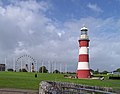 Smeaton's Tower (from Plymouth)
 Exeter Civic Centre (from Exeter)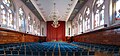

 The New Palace Theatre in 2008 (from Plymouth)
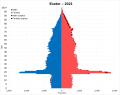 Population pyramid of Exeter (district) in 2021 (from Exeter)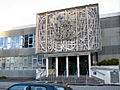

 Civic Centre, completed 1962, symbolic of the post-war 'Heroic Modernism' of the welfare state; a listed building since 2007 (from Plymouth)
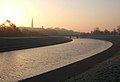 Exe Flood Relief Channel, constructed after the floods of 1960 (from Exeter)
 "The House That Moved", West Street, Exeter (from Exeter)
 The River Exe (from Exeter)
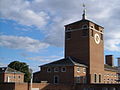 County Hall, Exeter. Headquarters for Devon County Council. (from Devon)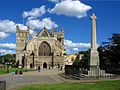

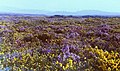
 Charter map of Sutton harbour and Plymouth in 1540 (from Plymouth)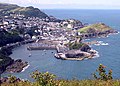
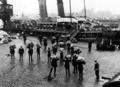 Unloading mail by hand from the Sir Francis Drake at Millbay Docks, March 1926 (from Plymouth)
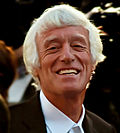 Roger Deakins, multi-award winning cinematographer (from Devon)
 An illustration of Exeter in 1563, entitled Civitas Exoniae (vulgo Excester) urbs primaria in comitatu Devoniae (from Exeter)
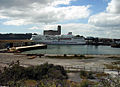 MV Pont-Aven: Brittany Ferries service to Roscoff, France and Santander, Spain in Millbay Docks (from Plymouth)
 The flag of the historic county of Devon (from Devon)
 Plymouth the Hoe (postcard c. 1920) by A.R. Quinton (from Plymouth)
 The Cathedral Green after a rare snowfall (from Exeter)
 The 'invincible' Spanish Armada, 1588 (from Plymouth)
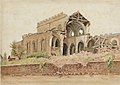 Watercolour by Olive Wharry c. 1942 depicting St Sidwell's Church after the Blitz. A 250 kilograms (550 lb) bomb struck the church in the early hours of 4 May 1942, leaving the tower standing but fatally weakened. It was subsequently demolished. (Collection of the Royal Albert Memorial Museum) (from Exeter)
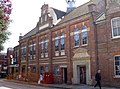 Barnfield Theatre (from Exeter)
 Exeter Canal Basin (from Exeter)
 Sir Francis Drake (from Plymouth)
 The Exeter Law Courts (from Exeter)
 A portion of Exeter's city wall, formed of both Roman and medieval stones (from Exeter)
 The Plymouth harbour near 1860 (from Plymouth)
 Remains of the medieval Exe Bridge, built around 1200 (from Exeter)
 Laver Building, University of Exeter (from Exeter)
 The beach at Westward Ho!, North Devon, looking north towards the shared estuary of the rivers Taw and Torridge (from Devon)
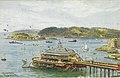 Plymouth the Promenade Pier (postcard c. 1925) by A. R. Quinton (from Plymouth)

 Naval War Memorial (from Plymouth)
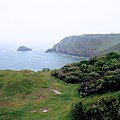 Cliffs in Devon (from Devon)
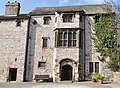 Prysten House (1498) on Finewell Street is the oldest surviving house in Plymouth, built from local Plymouth limestone and Dartmoor granite. (from Plymouth)
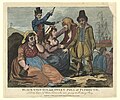 Black-eyed Sue and Sweet Poll of Plymouth mourning their lovers, who are soon to be transported to Botany Bay, 1792 (from Plymouth)
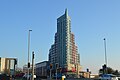 Beckley Point (from Plymouth)
 John Lewis store on Sidwell Street (from Exeter)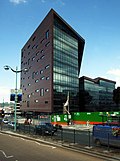
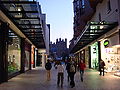 Princesshay Shopping Centre with Exeter Cathedral in the background (from Exeter)
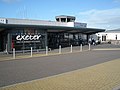 Exeter International Airport (from Exeter)
 Geological map of Wales & Southwest England (from Devon)
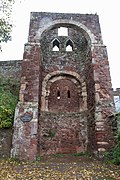 The gatehouse of Rougemont Castle (from Exeter)
 Siege of Plymouth, 1643 (from Plymouth)
 Inter-city trains at Plymouth station, operated by Great Western Railway (from Plymouth)
 The High Street c. 1895 (from Exeter)
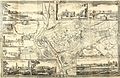 John Rocque's 1744 map of Exeter (from Exeter)
 The Mayflower Steps Memorial (from Plymouth)
 Lamp standard from the 1905 Exe Bridge, installed at Butts Ferry on Exeter Quay in 1983 (from Exeter)
 St Michael's Church and Episcopal Building (from Exeter)
 Frontispiece to Shapter's "History of the Cholera in Exeter in 1832" (from Exeter)
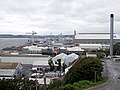 HMNB Devonport – the largest operational naval base in Western Europe. (from Plymouth)
 Interior of the Drake Circus Shopping Centre in 2006 (from Plymouth)
 Grade I listed Town Hall, Column and Library in Devonport (from Plymouth)
 St David's Church, Exeter (from Exeter)
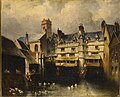 Oil on canvas painting by an unknown artist c.1870. These houses were later demolished to make way for St Edmund's Church. The painting depicts the edge of the River Exe flowing under three arches of the Old Exe Bridge, with houses on the bridge and on the river bank, St Edmund's Church can be seen in the top left. (from Exeter)
 Plymouth Drake's Island (1860s–1880s) by Francis Frith (from Plymouth)
 Northeastward view of Plymouth Sound from Mount Edgcumbe Country Park in Cornwall, with Drake's Island (centre) and, behind it from left to right, the Royal Citadel, the fuel tanks of Cattedown, and Mount Batten; in the background, the hills of Dartmoor. (from Plymouth)
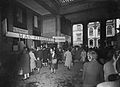 The Higher Market, Exeter, in 1943; at this time the larger firms such as Mac Fisheries had joined the smaller shopkeepers' stalls in the market, which, before the war, along with neighbouring Goldsmith Street, was earmarked for demolition; a new Civic Centre was to be built on the site. (from Exeter)
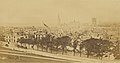 Plymouth (1860s–1880s) by Francis Frith (from Plymouth)
 The Exeter Riddle Sculpture in Exeter High Street, created by artist Michael Fairfax and installed in 2005 (from Exeter)
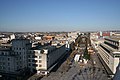 Armada Way looking north (from Plymouth)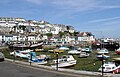


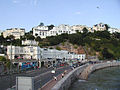

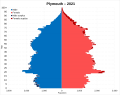 Population pyramid of Plymouth (unitary authority) in 2021 (from Plymouth)
 Exeter Guildhall, which dates from 1470 (from Exeter)
 Plymouth Pavilions, home to the Plymouth City Patriots. (from Plymouth)
 The coat of arms of Devon County Council (from Devon)
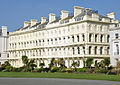 Elliot Terrace, Plymouth Hoe (from Plymouth)


.jpg)


.jpg)


.jpg)


.jpg)


_(cropped).jpg)


.jpg)


Selected image

Recently featured: Bigbury sea tractor - Crazywell cross - South Devon Cattle - Dartmoor tors – Plymouth harbour – Westward Ho! beach
Subcategories

Map


Related portals


Did you know...

- ... that Plymouth's lighthouse, Smeaton's Tower (pictured), was dismantled and then rebuilt on Plymouth Hoe as a memorial?
- ... that Devon is the third largest of the English counties and has a population of 1,109,900?
- ... that the name Devon derives from the name of the Celtic people who inhabited the southwestern peninsula of Britain at the time of the Roman invasion?
- ... that Devon was one of the first areas of England settled following the end of the last ice age?
- ... that the St Nicholas Priory in Exeter is being restored with the same methods that were used 500 years ago?
- ... that Devon is the only county in England to have two separate coastlines?
- ... that there was no established coat of arms for Devon until 1926?
- ... that the English Riviera Geopark in Torbay is the world's only urban Geopark?
Topics
WikiProjects

Associated Wikimedia
The following Wikimedia Foundation sister projects provide more on this subject:
-
 Commons
Free media repository -
 Wikidata
Free knowledge base -
 Wikiquote
Collection of quotations -
 Wikisource
Free-content library -
 Wikiversity
Free learning tools -
 Wikivoyage
Free travel guide -
 Wiktionary
Dictionary and thesaurus


